"Visible and mobile, my body is a thing among things; it's caught in the
fabric of the world, and its cohesion is that of a thing." Maurice Merleau-Ponty
We are, from one perspective, a culture of things. We have our gadgets and fancy bags and pads and pens and wallets and clothes and cars. Everywhere you look, there are more stores selling more things. We take this as a sign of prosperity. "Look! More stores! More things! Everything's great!" Shopping is a recreation, a family activity. We love things — or so it seems.
But I want to suggest that we don't, in fact, love things. We like to consume things. We want to buy them, own them, open them from their elaborate and often ill built containers — and then throw them away and buy some new things. Just look at the way people buy cars: a new one every few years. It's not things we like; it's the new (a most convenient truth for, and of, capitalism).
Some say we fetishize things. But I don't think we fetishize things enough.
We live in the material world. And I mean that in the most profound, far reaching sense. We are bodies. And we are of this world — of its stench and feel, its texture and play, its teeming complexity, its banality and beauty and grotesquerie. At times, we all imagine that maybe we are distinct from our bodies, that this flesh of the world betrays us or delights us but, in any case, is not us.
But shed this mortal coil and you shed life itself.
Now, it's not that we are only material bodies. We are immaterial bodies, too. We are feelings and thoughts and concepts and moods and notions and dreams. But these other things, these invisible things, are not primary or determinative. They don't drive the vehicle of our bodies. The visible and invisible worlds, the material and immaterial, are all mixed up together. At one and the same time, we are blood and love and bone and sweat and plastic and loneliness and wood and leaf and smile and gin and dope and engine and anxiety and steel and ink and glass and sea urchins. We are odor and idea, feeling and flesh, both. And neither came first.
To reduce material things either to commodity (capitalism) or irrelevance (religion) is to miss things all together. Things are complex and deserve our love, our respect, our time and reckoning — in both creation and consumption.The flippant ease with which we consume things testifies to our lack of love for them.
Things have a way of going, a speed and intensity, an entire calculus of possibility and wealth of delights that are at once utterly banal and utterly resonant. Such is this life. "Perforation! Shout it out!," writes Nicholson Baker in The Mezzanine. "The deliberate punctuated weakening of paper
and cardboard so that it will tear along an intended path, leaving a row
of fine-haired pills or tuftlets on each new edge! It is a staggering
conception, showing an age-transforming feel for the unique properties
of pulped wood fiber.” Such enthusiasm for things! It's like he's overcome with the spirit — of things!
Now this might not be the Sermon on the Mount. On the other hand, there is something much more powerful, more shocking, about it. To bestow such a seeming irrelevance with passion and poetry and without the intent of consuming and disposing of it — and with no profit motive; to relish the material world not over and against the immaterial but rather to relish all this life has to offer; indeed, to reckon this life, these things, here and now, while thoroughly participating in the invisible world of affect and idea; to live this life of things as if the things were always already imbued, always already run through, with the invisible world: this is nothing less than revolutionary.
Different things afford different ways of going, different ways of
thinking and feeling and being. Nicholson Baker is one of the great
proponents of things and is perhaps their most purple poet. He heeds things
in their particularity: "Has anyone yet said publicly how nice it is to
write on rubber with a ballpoint pen?" (From "Rarity," in The Size of Thoughts — that title alone says everything we need to know: the invisible world has size!) He does not pontificate, as I do, about the thingness of this world. No, he takes up those moments we pass over, these things we consider only for their use, and loves them with his time and words and energy. This is not trivial; on the contrary.
I want to say he elevates things but not to an altar. He does not put things in the place of gods as if seeking to reverse the order of things. He elevates the thingness of particular things to their rightful place amongst the living. To read The Mezzanine with its florid elaborations of shoelaces and such — it is one ride up an escalator in an office building, new shoelaces ensconced in a bag — is to have a new kind of (a)religious experience: it is the word — not the Word — made flesh. And vice versa.
(Language is simultaneously mark and meaning, a spectral creature that moves between and amongst bodies and their ideas, flesh and its feelings. Those, like Baker —and Nabokov and Junot Diaz ad Melville and and and — who relish language not as an expression of something but as expression itself, are revolutionaries who redistribute the relationship between things and ideas. A love of language is the phenomenologist's true fetish.)
To love things is to enjoy them, not consume them (although enjoyment may entail consumption). It is to consider the feel of things, to dwell within their multihued domain, to linger with their resonances, both visible and invisible.
After all, we are things, too — things among things, as Merleau-Ponty writes. To assume things are what we consume and dispose of means we are what we consume and dispose of. To love things is to love yourself, to love others, to love life. To love things is ethical.
4.15.2012


4.09.2012
Don't Simplify
There is a mantra — a meme, perhaps, but meme has become such a meme that writing it here makes me feel, well, uncomfortably self-conscious — so, yes, there is this memetic mantra afoot, and that's been afoot for years now, that simple is better. Get rid of the noise, we say, reduce the clutter, eliminate the extraneous.
No doubt, there is something alluring, something seductive, about simplicity. The word itself is enticing, skipping down the tongue with a playful, dulcet tone that seems to get to the point without being corporate or cold. Simplicity, in word and deed, is ready for consumption. And, best of all, it's true — by razing the forests of complexity, we can focus on the heart of the matter. With all that, what's not to like?
But the so called noise of life is, to me, the good part — or at least as tasty as any truth you're offering. An underlying premise of simplicity is that there is a heart of the matter, a nugget that sits within, an essence. The will to simplicity is theological, Platonic, if not downright Christian — although this is because the complexity of both Plato and Christianity have been simplified. I've read the Gospels a few times as well as a handful of Platonic dialogues and, man, they both contradict themselves and shift tone, register, and argument often. I mean, the Gospels give us four different version of Jesus' life! And Plato, well, he gives us irony — irony! Meaning two things at once! Still, the will to simplicity suggests that we might shed the body to get to the soul, sift the dirt to get to the clean, reduce the noise to hear the truth.
Now, it's obvious that life today is harried. We have tasks and information that scream and bleep and blip at us all day, everyday, even in our dreams. The interweb has not streamlined life. So certainly there is a justifiable desire to reduce these hassles, this ceaseless barrage, very little of which actually matters.
What's wrong, then, with just getting rid of it? Whats' wrong with simplifying?
Well, the problem is that these are two different questions that have become conflated. Getting rid of irritating noise seems, well, not really a matter of simplification but of simple manners — or, at least, self-maintenance. It seems to me to have little to do with simplicity.
In my day job — I admit it: I earn my keep doing brand strategy and writing for enormous global corporations — I am tasked with creating corporate communications (that word sounds so officious and scientific). Usually, these communications are a mess as my client wants to say everything to everyone: We do this! And this! And this! Oh, and this too! The result is people hear too many different things and get confused.
I can't blame these clients for wanting to say everything. This is what they do and think about everyday. They don't realize that all the little things that eat up their time and brain and energy don't matter much to anyone else. People just wanna know if what you're selling is worth having. So my job is to eliminate some of these finer, more pedantic points of a given business or product and just focus on a few things.
In the design world, a world of which I am a part, this is often referred to as simplification. We are simplifying our clients' communications, or so we say.
But that is not simplifying. It's organzing. My job is not just to eliminate things. My job is weave all these different things into a cogent and compelling argument. This doesn't simplify; it clarifies. It prioritizes, creates area of focus, weaves the disparate elements together.
The result may be simple. But more often it's actually quite complex. After all, arguments that stitch different elements together into a whole that has areas of focus and relative weight is, well, complex. In any case, my job is not to simplify: it's to articulate complexity in a compelling manner.
Often, the so called noise of life, all that excess stuff, is juicy and delectable. I, for one — and perhaps not unsurprisingly — like my prose purple — Nabokov and Melville and Nicholson Baker and Junot Diaz and all those who let the words flow unabashedly for their own sake, for the sake of the world, for the sake of you. I like Gehry and Gaudi, too.
Now, I tend not to like buildings or spaces that are too ornate. But Gehry and Gaudi are not ornate. Their flourishes are constitutive of the building, just as Nabokov's prose is not ornament to the plot. Nabokov's words don't tell the story; his words are the story. And Gehry's curves don't dress up the wall; they are the wall.
Take food. You're eating some kind something and there's a lot of flavor; in fact, you want to say there is too much. Which might mean there are too many flavors or that the flavors that are there are too strong — too much garlic, say, or fenugreek.
But when I reduce the number of spices or the amount of garlic, have I necessarily simplified my dish? The dish, at first, was excessive but not necessarily complex. In fact, by reducing the number of flavors or quantity of one flavor, I may have made the dish more complex as the flavors interact in more ways — rather than being lost in a drone of flavors, like words playing too long in an echo chamber and become a monotone slur.
Back to my client, for a moment, the one that wants so say everything every time. That, it seems to me, is the simple solution. What does my product do? Here's a big ol' list. The complex thing to do is to edit and weave all those elements into a whole that remains nonetheless multiple. Now, I want to distinguish between the doing — which may be complex — and the product. Yes, making an argument is a complex task. But the argument, in the end, may be complex, as well. So much so that I want to say that a good meal or a good brand present complex matters in a compelling way.
Complexity is tricky as it demands both quantity and quality. That is, to be complex is to have a lot of something. But it is not just the amount — I don't say, "I love ice cream! Gimme a complex!" No, complexity is the qualitative state of a certain quantity — the quantity of relationships between things; the quantity of divergent resonances; the infinite movement that belies ready description. In any case, complexity is not just a lot of something. Nor is it a synonym for confusion. It entails a certain intricacy of arrangement, as the Wikipedia says. And that, often, is a good thing.
Life is complex. It has an infinite number of shifting relationships. And it never stops changing. It can't just be said once and for all; it can't be summed up. Why would we want to?
I know life has become loud and harried; but let's not confuse that with complexity. In fact, we are so distracted that our lives are not complex. They're reactive and robotic: answer the beep, answer the beep, answer the beep. So many beeps does not complexity make. That's annoyance, not complexity.
And so we want quiet; we want peace. But let's not confuse these things with simplicity. Because life can't be simplified as it runneth over with itself. And that's how I want it, "in its true, knotted, clotted, viny multifariousness, with all of the colorful streamers of intelligence still taped on and flapping in the wind" (N Baker).
No doubt, there is something alluring, something seductive, about simplicity. The word itself is enticing, skipping down the tongue with a playful, dulcet tone that seems to get to the point without being corporate or cold. Simplicity, in word and deed, is ready for consumption. And, best of all, it's true — by razing the forests of complexity, we can focus on the heart of the matter. With all that, what's not to like?
But the so called noise of life is, to me, the good part — or at least as tasty as any truth you're offering. An underlying premise of simplicity is that there is a heart of the matter, a nugget that sits within, an essence. The will to simplicity is theological, Platonic, if not downright Christian — although this is because the complexity of both Plato and Christianity have been simplified. I've read the Gospels a few times as well as a handful of Platonic dialogues and, man, they both contradict themselves and shift tone, register, and argument often. I mean, the Gospels give us four different version of Jesus' life! And Plato, well, he gives us irony — irony! Meaning two things at once! Still, the will to simplicity suggests that we might shed the body to get to the soul, sift the dirt to get to the clean, reduce the noise to hear the truth.
Now, it's obvious that life today is harried. We have tasks and information that scream and bleep and blip at us all day, everyday, even in our dreams. The interweb has not streamlined life. So certainly there is a justifiable desire to reduce these hassles, this ceaseless barrage, very little of which actually matters.
What's wrong, then, with just getting rid of it? Whats' wrong with simplifying?
Well, the problem is that these are two different questions that have become conflated. Getting rid of irritating noise seems, well, not really a matter of simplification but of simple manners — or, at least, self-maintenance. It seems to me to have little to do with simplicity.
In my day job — I admit it: I earn my keep doing brand strategy and writing for enormous global corporations — I am tasked with creating corporate communications (that word sounds so officious and scientific). Usually, these communications are a mess as my client wants to say everything to everyone: We do this! And this! And this! Oh, and this too! The result is people hear too many different things and get confused.
I can't blame these clients for wanting to say everything. This is what they do and think about everyday. They don't realize that all the little things that eat up their time and brain and energy don't matter much to anyone else. People just wanna know if what you're selling is worth having. So my job is to eliminate some of these finer, more pedantic points of a given business or product and just focus on a few things.
In the design world, a world of which I am a part, this is often referred to as simplification. We are simplifying our clients' communications, or so we say.
But that is not simplifying. It's organzing. My job is not just to eliminate things. My job is weave all these different things into a cogent and compelling argument. This doesn't simplify; it clarifies. It prioritizes, creates area of focus, weaves the disparate elements together.
The result may be simple. But more often it's actually quite complex. After all, arguments that stitch different elements together into a whole that has areas of focus and relative weight is, well, complex. In any case, my job is not to simplify: it's to articulate complexity in a compelling manner.
Often, the so called noise of life, all that excess stuff, is juicy and delectable. I, for one — and perhaps not unsurprisingly — like my prose purple — Nabokov and Melville and Nicholson Baker and Junot Diaz and all those who let the words flow unabashedly for their own sake, for the sake of the world, for the sake of you. I like Gehry and Gaudi, too.
Now, I tend not to like buildings or spaces that are too ornate. But Gehry and Gaudi are not ornate. Their flourishes are constitutive of the building, just as Nabokov's prose is not ornament to the plot. Nabokov's words don't tell the story; his words are the story. And Gehry's curves don't dress up the wall; they are the wall.
Take food. You're eating some kind something and there's a lot of flavor; in fact, you want to say there is too much. Which might mean there are too many flavors or that the flavors that are there are too strong — too much garlic, say, or fenugreek.
But when I reduce the number of spices or the amount of garlic, have I necessarily simplified my dish? The dish, at first, was excessive but not necessarily complex. In fact, by reducing the number of flavors or quantity of one flavor, I may have made the dish more complex as the flavors interact in more ways — rather than being lost in a drone of flavors, like words playing too long in an echo chamber and become a monotone slur.
Back to my client, for a moment, the one that wants so say everything every time. That, it seems to me, is the simple solution. What does my product do? Here's a big ol' list. The complex thing to do is to edit and weave all those elements into a whole that remains nonetheless multiple. Now, I want to distinguish between the doing — which may be complex — and the product. Yes, making an argument is a complex task. But the argument, in the end, may be complex, as well. So much so that I want to say that a good meal or a good brand present complex matters in a compelling way.
Complexity is tricky as it demands both quantity and quality. That is, to be complex is to have a lot of something. But it is not just the amount — I don't say, "I love ice cream! Gimme a complex!" No, complexity is the qualitative state of a certain quantity — the quantity of relationships between things; the quantity of divergent resonances; the infinite movement that belies ready description. In any case, complexity is not just a lot of something. Nor is it a synonym for confusion. It entails a certain intricacy of arrangement, as the Wikipedia says. And that, often, is a good thing.
Life is complex. It has an infinite number of shifting relationships. And it never stops changing. It can't just be said once and for all; it can't be summed up. Why would we want to?
I know life has become loud and harried; but let's not confuse that with complexity. In fact, we are so distracted that our lives are not complex. They're reactive and robotic: answer the beep, answer the beep, answer the beep. So many beeps does not complexity make. That's annoyance, not complexity.
And so we want quiet; we want peace. But let's not confuse these things with simplicity. Because life can't be simplified as it runneth over with itself. And that's how I want it, "in its true, knotted, clotted, viny multifariousness, with all of the colorful streamers of intelligence still taped on and flapping in the wind" (N Baker).
4.08.2012
You Are Cinema

This calls out one of the strangest things about films: they move — and, even stranger, they move without being attached to a body. There was always movement in performance — actors, singers, dancers — but cinema is something else all together: it is pictures of this world but its pictures keep moving and changing, just like so called real things!
But what is this sensation? It's not just that we're taking in movement (is "taking in" the right phrase?). It's that we're a machine, an apparatus. We feel as if we're no longer a soul driving a body but that, in some way, we are a body — a body that does all these things, a little machine that processes the world and makes shit, sweat, piss, words, gadgets, jokes, come, odors, dreams, that makes images. Descartes be damned!
This sensation can make us a little anxious but it is first and foremost exhilarating. As we become camera, for an instant we experience the speed, rhythm, and intensity of the world pouring into our heads, into our bodies. To feel like an apparatus is not horrifying, stultifying; on the contrary, it is enlivening, liberating us from the banality of ego.
The thing is, we are not just camera taking in the world. We are multimedia recording machines: we record moving images, sounds, physical sensations, tastes, smells. That world that pours into us in its sublime density of sensation stays with us, stays in us, becomes part of us. Just as we transform the food we eat into blood and bone and shit, we transform the images that enter us into blood and bone and mood and dream — and, if we're lucky, we shit some out.
Unlike the camera, however, we don't just record: we make sense. A camera is thoroughly stupid; it doesn't know a thing. It can make sense of light, create focal planes, perhaps identify objects and faces. But it can't tell you what this or that thing is, its history or possible future, why and how it matters to anyone in any way. A human being, however, records and categorizes at the same time. We focus on this or that, ignoring some things while making the world of others. We prioritize. Which is to say, we edit.
And then we play it all back. Where? On the screen that is our bodies, that is our words and lives. We take in the world, edit it, then play it back on our face and fingers and flesh and feelings.
The movement from recording to playback is not one-to-one as it often is in Hollywood dreck or soap operas in which someone gets bad news and then looks sad. Watch any Cassavetes film to see and hear how bodies create cinema, how the movement from recording to playback is always mysterious.
Our body-engines are complex. We take in and process according to infinite, singular algorithms of taste and knowledge and power and metabolism. This is why two people seeming to experience the same thing actually make two different films of the experience (the films are their bodies, their selves, their actions). We are style-engines.
We are not just cameras, then, and not just recoding machines: we are cinema engines.
This Now
There is certainly something compelling about the power of now (pace Eckhart Tolle). This moment, no doubt, is perfect. It's only when we feel the burden of yesterday or tomorrow that we find anxiety, stress, negativity.
As Tolle says, if you focus only on the now, there can be no stress. But when you think about the past and feel regret or shame or even pride, then the now becomes a burden. When you think about the future, your fears about what might transpire sully the now. Ah, but right this very moment, here and now, all is perfect — necessarily.
We've all had those moments: the world falls away as the self dissolves into a flowing seething surging now and yes indeedy holy moly it is awesome.
But the now is complex for it is always a before and after. The now is a network — a singularity, perhaps, but it is not what I'd call self-same: it is a multiplicity, a fold of possibilities and affective states. The past undulates through it; the future casts shadows; the present inflects. And it's not that those elements interfere with the now: they are the now.
Think of it this way. You're sitting on a bench, awash in the now. At some point, you bend down and tie your shoes. Later, you zip up your jacket. After sitting for a few hours, you get hungry and walk towards a restaurant you know and, after perusing the menu, order your favorite thing. How did you know how to do all these things? From memory, from your past. How did you know the meal would sate your hunger or that you would even like it? Your memory about what the future will bring.
Time is not linear. It is not those clock hands going in their steady circle; it is not the cyclical flip of digital numbers. The now cannot be clearly delineated from the past and future.
And, to complicate things, the past can't be clearly delineated, either. Which seems odd because isn't the past over and done? Well, no, it's not. Memory is not a record of the past. It is the past still happening. You are all the things that have happened to you. That scar on your finger where you cut yourself in 5th grade? That's the past that is you now. You are made up of such scars — how you feel and what you want and how you react and behave and live and love are all forged through your experiences, through what your body and your emotions experience and have experienced.
But it's not that the past determines who you are. The present, what's happening right now, inflects the past. Picture it like this: if the past is a trajectory — and it not just one but multiple trajectories — that looks like it leads into the now, whatever you do now shifts that trajectory, like sending ripples down a string. Which is to say, it's not that the past leads to this moment; that is the language of linearity. It's that the past and the present are continuous threads of your becoming, of the trajectory that is you. So, of necessity, what you do now shapes the past.
The future can't be clearly delineated, either. For while it is by definition that which has not happened yet but will happen, this set of possibilities is necessarily delimited by the past and the now.
When I greet the day, I don't just embrace the now. Like many people, I imagine the day, how it might go. This is not an abandonment of the now. On the contrary, I let the now lead me into possible future states, how my present state might lead this way or that. This is not an attempt to control the future. It entails a beautiful abandonment to the flow of the day, the flow of the now, a flow that doesn't stand still ever, a flow that moves through multiple pasts and multiple nows and multiple futures.
The now, then, is not a blank or neutral stopping point. It is, rather, an inflection point, a juncture at which multiple paths turn (or not) and create different possible futures — it's the turn in the stream of things. The trick, to me, is not to grasp the now but abandon to this turn, to this flow, to this Heraclitian river — to this now that will never be a now but always a knotting of time.
So, yes, I believe along with Tolle that regret and shame and fear — a certain thinking about the past and future — are the source of our anxiety, our sickness. But I want to shape his invocation of the now, draw a more elaborate image, one that is not sublime but effable and thinkable. There are those sublime moments of the now, moments I love. But these, to me, are different than the way I greet the now everyday.
The now I live in is this gloriously complex surging and folding, this pleating and extending in all directions at once. This now is not as much a steady hum as it is a glorious orchestration of time, an impossible but actual origami.
As Tolle says, if you focus only on the now, there can be no stress. But when you think about the past and feel regret or shame or even pride, then the now becomes a burden. When you think about the future, your fears about what might transpire sully the now. Ah, but right this very moment, here and now, all is perfect — necessarily.
We've all had those moments: the world falls away as the self dissolves into a flowing seething surging now and yes indeedy holy moly it is awesome.
But the now is complex for it is always a before and after. The now is a network — a singularity, perhaps, but it is not what I'd call self-same: it is a multiplicity, a fold of possibilities and affective states. The past undulates through it; the future casts shadows; the present inflects. And it's not that those elements interfere with the now: they are the now.
Think of it this way. You're sitting on a bench, awash in the now. At some point, you bend down and tie your shoes. Later, you zip up your jacket. After sitting for a few hours, you get hungry and walk towards a restaurant you know and, after perusing the menu, order your favorite thing. How did you know how to do all these things? From memory, from your past. How did you know the meal would sate your hunger or that you would even like it? Your memory about what the future will bring.
Time is not linear. It is not those clock hands going in their steady circle; it is not the cyclical flip of digital numbers. The now cannot be clearly delineated from the past and future.
And, to complicate things, the past can't be clearly delineated, either. Which seems odd because isn't the past over and done? Well, no, it's not. Memory is not a record of the past. It is the past still happening. You are all the things that have happened to you. That scar on your finger where you cut yourself in 5th grade? That's the past that is you now. You are made up of such scars — how you feel and what you want and how you react and behave and live and love are all forged through your experiences, through what your body and your emotions experience and have experienced.
But it's not that the past determines who you are. The present, what's happening right now, inflects the past. Picture it like this: if the past is a trajectory — and it not just one but multiple trajectories — that looks like it leads into the now, whatever you do now shifts that trajectory, like sending ripples down a string. Which is to say, it's not that the past leads to this moment; that is the language of linearity. It's that the past and the present are continuous threads of your becoming, of the trajectory that is you. So, of necessity, what you do now shapes the past.
The future can't be clearly delineated, either. For while it is by definition that which has not happened yet but will happen, this set of possibilities is necessarily delimited by the past and the now.
When I greet the day, I don't just embrace the now. Like many people, I imagine the day, how it might go. This is not an abandonment of the now. On the contrary, I let the now lead me into possible future states, how my present state might lead this way or that. This is not an attempt to control the future. It entails a beautiful abandonment to the flow of the day, the flow of the now, a flow that doesn't stand still ever, a flow that moves through multiple pasts and multiple nows and multiple futures.
The now, then, is not a blank or neutral stopping point. It is, rather, an inflection point, a juncture at which multiple paths turn (or not) and create different possible futures — it's the turn in the stream of things. The trick, to me, is not to grasp the now but abandon to this turn, to this flow, to this Heraclitian river — to this now that will never be a now but always a knotting of time.
So, yes, I believe along with Tolle that regret and shame and fear — a certain thinking about the past and future — are the source of our anxiety, our sickness. But I want to shape his invocation of the now, draw a more elaborate image, one that is not sublime but effable and thinkable. There are those sublime moments of the now, moments I love. But these, to me, are different than the way I greet the now everyday.
The now I live in is this gloriously complex surging and folding, this pleating and extending in all directions at once. This now is not as much a steady hum as it is a glorious orchestration of time, an impossible but actual origami.
4.05.2012
This Glorious Entanglement: On Rebecca Goldfarb's "Only ____" at Eli Ridgway
Images don't line the wall; they punctuate it. And while photos in a one-person show do usually have a connection — a style or theme or subject matter — these are even more explicitly linked: they are literally strung together.

We are not looking at photographs per se; these are not first and foremost images of anything. Our first move is not to approach the individual images but to take in the scene as a whole. After all, there's string emanating from them. These images seem more like moments of an event than they do representations of something.
The familiar signs of framing — matting, geometry, signage — are all missing. The string that travels from within the images and moves beyond the images is the frame of a sort. As it traipses, the string creates a space within this space — a space that is neither the space of the room nor the space of the images, a spectral but palpable space. Whereas a frame fixes its object in place, this string-frame is in motion, forging connections, stipulating boundaries, constituting an event.
But what is this event? The title, "Only ______" suggests reduction, simplification, a revelation of something obvious: It's only....what? How does one even say the title of this show — Open Blank? With pronounced pith, the title refuses our attempt to assume this art, to take it up in one fell swoop, to know it and name it.
The map that's inscribed on one wall is not an explanation. It is as much the territory as it is a map: it's become part of the show, folded into the event, a stop on the tour rather than the guide to the tour.

What, then, is happening? As we move in closer to examine the individual images, we are privy to a an obscured intimacy: a naked woman on her knees but turned away from us; a naked woman extending her frame, again away from us; an old writing desk, all the drawers shut. These are private moments, inside moments. But our voyeurism is deferred by shadow and posture. These images do not reward or answer us when we look within. On the contrary, as the string takes leave of the image, it asks us to follow a path outwards.
So let's follow the string to see where it leads us. We find the string in multiple places. It is in the different images as there are pictures of string. And then there is the material string that winds through the space.
But there is a third string, as well, one that is neither virtual nor real, both virtual and real: this is the string that exists at the surface of the image. It is neither in the image nor outside the image; it's as if it's inscribed itself on the surface of the photograph. (That's a strange phrase — "surface of the photograph" — as a photo is always a surface.)
 This string moves from the inside of the image, through the surface and into the space, and then back into a different image. It is weaving together distinct planes — surface and depth, image and image, and, if not viewer and artist, then viewer and image, artist and image.
This weave is not a straight stitch. It is knotted and tangled. How could it be otherwise? This winding, knotted string maps the impossible calculus of the movement from inside to outside and from place to place, image to image, traversing the infinite fold of becoming, that pleated plane that marks the private from the public, the inside from the outside, the depth from the surface, the map from the tour.
This is the entangled event of art, of creating and consuming, that movement from an obscured interiority — of both artist and viewer — to the light of day and back in an infinitely complex algorithm. We are strung along and, in the process, woven into the event: the spectral space forged by the string now includes us.
Goldfarb gives us a certain architecture of the experience of art. This is a phenomenology of art, its creation and consumption, in which there is no true depth: it's all surface, pleated and woven together in elaborate, complex ways. Not everything is revealed; there are obscure corners that are hard to make out. But they are not deep, only hidden by pleats of light.
This show offers a blueprint of the art event, stripped of its content, of its dramaturgy, of its narrative. What is left is only ________: a glorious entanglement.

We are not looking at photographs per se; these are not first and foremost images of anything. Our first move is not to approach the individual images but to take in the scene as a whole. After all, there's string emanating from them. These images seem more like moments of an event than they do representations of something.
The familiar signs of framing — matting, geometry, signage — are all missing. The string that travels from within the images and moves beyond the images is the frame of a sort. As it traipses, the string creates a space within this space — a space that is neither the space of the room nor the space of the images, a spectral but palpable space. Whereas a frame fixes its object in place, this string-frame is in motion, forging connections, stipulating boundaries, constituting an event.
But what is this event? The title, "Only ______" suggests reduction, simplification, a revelation of something obvious: It's only....what? How does one even say the title of this show — Open Blank? With pronounced pith, the title refuses our attempt to assume this art, to take it up in one fell swoop, to know it and name it.
The map that's inscribed on one wall is not an explanation. It is as much the territory as it is a map: it's become part of the show, folded into the event, a stop on the tour rather than the guide to the tour.

What, then, is happening? As we move in closer to examine the individual images, we are privy to a an obscured intimacy: a naked woman on her knees but turned away from us; a naked woman extending her frame, again away from us; an old writing desk, all the drawers shut. These are private moments, inside moments. But our voyeurism is deferred by shadow and posture. These images do not reward or answer us when we look within. On the contrary, as the string takes leave of the image, it asks us to follow a path outwards.
So let's follow the string to see where it leads us. We find the string in multiple places. It is in the different images as there are pictures of string. And then there is the material string that winds through the space.
But there is a third string, as well, one that is neither virtual nor real, both virtual and real: this is the string that exists at the surface of the image. It is neither in the image nor outside the image; it's as if it's inscribed itself on the surface of the photograph. (That's a strange phrase — "surface of the photograph" — as a photo is always a surface.)

This weave is not a straight stitch. It is knotted and tangled. How could it be otherwise? This winding, knotted string maps the impossible calculus of the movement from inside to outside and from place to place, image to image, traversing the infinite fold of becoming, that pleated plane that marks the private from the public, the inside from the outside, the depth from the surface, the map from the tour.
This is the entangled event of art, of creating and consuming, that movement from an obscured interiority — of both artist and viewer — to the light of day and back in an infinitely complex algorithm. We are strung along and, in the process, woven into the event: the spectral space forged by the string now includes us.
Goldfarb gives us a certain architecture of the experience of art. This is a phenomenology of art, its creation and consumption, in which there is no true depth: it's all surface, pleated and woven together in elaborate, complex ways. Not everything is revealed; there are obscure corners that are hard to make out. But they are not deep, only hidden by pleats of light.
This show offers a blueprint of the art event, stripped of its content, of its dramaturgy, of its narrative. What is left is only ________: a glorious entanglement.
4.03.2012
The Practice of Critique
How does one go about critiquing something?
Well, it entails what is often called systems thinking — the ability to see something as a complex operation amidst other complex operations. The critic considers many moving factors and how these factors interact with each other and with other bodies and systems.
Let's take a song. And not just any song but a particular song, a song I've written about before: "Some Kinda Love" by the Velvet Underground. How do we go about critiquing it?
Of course — of course! — your critique is tempered by your body, by your perspective. How could it be otherwise? But your perspective is just that: a view on the scene. And, as such, is external, not internal (as if there were a clear or relevant distinction between the two — we are always already hailed, as Althusser would say).
The practice of criticism is just that — a practice. It is a doing; it is a technique; it is an art.
Well, it entails what is often called systems thinking — the ability to see something as a complex operation amidst other complex operations. The critic considers many moving factors and how these factors interact with each other and with other bodies and systems.
Let's take a song. And not just any song but a particular song, a song I've written about before: "Some Kinda Love" by the Velvet Underground. How do we go about critiquing it?
- What does it say?
- What are the lyrics?
- How does it say it?
- What is its tone — sentimental? Deadpan? Angry? Understated? Smiling?
- What is the relationship between this what and this how?
- How does this how inflect the what?
- Does it deliver lovelorn sentiment in a deadpan tone? What does this do to us? Does it undermine the lyric? Amplify it? Qualify it? How?
- What is its affect?
- This, of course, comes from the combination of the how and the what.
- How does it stand towards its audience?
- Does it stand back and ask you to watch? Does it alienate you? Piss you off? Include you? The sub-title to Nietzsche's Zarathustra is "A Book for None and All." Nietzsche doesn't mind alienating his audience; in fact, he often tries to. What about this song?
- Some songs ask us to sing along, to participate — think folk music or even the Dead. What about the Velvet Underground in this song?
- Some songs beg us to identify — think kids walking down the street rapping Public Enemy (ok, I'm dated). They want to become Chuck D. What about the VU in this song?
- How is it situated in its network?
- For instance, it is some kind of love song, or so it says. So how does it stand towards other love songs? Towards expectations of love songs? This is tricky as you don't want to create a straw man (ie, "Most love songs are silly.."). Rather, you might want to examine the structure of great love songs. This one, for instance, is not addressed at one person but gives us four characters (at least): Margarita, Tom, the speaker, you.
- Now extend its network
- How does it stand towards love as a concept? As an experience?
- How does it stand towards songs? What other songs does it conjure?
- How does it stand towards music? What types of music does it conjure?
- Performance: the relationship between the what and the how
- Affect: how the song feels — not how it makes you feel but how it feels
- Posture: how it stand towards the world and towards its audience
- Network: how it connects with those things it consumes and conjure — ideas, concepts, songs, experiences, words
Of course — of course! — your critique is tempered by your body, by your perspective. How could it be otherwise? But your perspective is just that: a view on the scene. And, as such, is external, not internal (as if there were a clear or relevant distinction between the two — we are always already hailed, as Althusser would say).
The practice of criticism is just that — a practice. It is a doing; it is a technique; it is an art.
4.01.2012
The Generosity of Criticism
One night, I found myself in my regular bar surprised to find there was an amateur stand up comedy event happening. The young comedians were not very good — they were aping the all too familiar tropes. But one comedian broke from his script a couple of times to engage the audience — which was a tad rambunctious — and in those brief moments he showed signs of vitality.
I wanted to discuss his act with him. I didn't just want to say good job or, for that matter, shitty job — because what do either of those things accomplish? I wanted to talk about what worked and what didn't, his ethos, his rhythm, how he stands towards other comedians, comedy in general, how he wants to stand towards the crowd, what his desired terms of engagement are. Which is to say, I wanted to critique his performance.
But there was no way, socially, I could do that — at least in my position as some random dude drinking at the bar. From strangers, from the general audience, we expect either thumbs up or thumbs down or a so-so. Now, he may very well be right not to listen to me — who the heck am I? — but that's not my point. My point is that we expect judgment from each other but when it comes to critique, we take offense.
And this just seems insane as what is more generous than critique? It demands time and energy, a lending of oneself to the performance of another. Judgment leans back in its chair and, exerting the bare minimum of energy, points a thumb up or down. But critique leans forward in its chair, poised and attentive, heeding and contemplating, digesting and imagining.
To say whether you like or dislike something is, alas, not very interesting to anyone outside of your immediate circle of friends. To them, the mere fact of you liking something might say quite a bit. After all, they know your taste, what you've liked and disliked in the past and, hopefully, why. You have a style; you are an algorithm of selection. But to anyone not familiar with this algorithm, the passing of judgment is as boring as a stranger's dream.
To be critical is to go with something. It is to make sense of its style, how it metabolizes the world, what it takes up and how. It doesn't just say, "Cool" or "Duh." It lends its own body to the performance, follows its moves and motivations. To reckon the style of a thing — of a booze, book, or band — is to fully digest that thing, let it run through you to see what kind of sense you can make of it. And then to extend that sense, to follow it beyond this performance to see how it can go, its possibilities and extensions.
One of my favorite things to do when I was teaching MFA students in fine arts was to do studio visits, especially as I'm not a visual artist. I'd go to the student's studio and look at work in whatever state and lend some words. Imagine, now, if all I said was, "That's good! I like it!" or "Man, that's not good." Both are equally worthless. My job and my pleasure — a rare alignment of the two — was to articulate what I saw happening and then wonder how else it might go, what other trajectories it might take, how it might inflect the world.
Judgment has little to do with the other; it is solipsistic. And, often, that is great — after all, few things are worthy of one's time and energy, worthy of one's critique. Like it or hate it and move on. Judgment is brutal and callous — whether you like something or hate it — and as such can be a good parry for a world full of shit (although I prefer indifference to judgment — less energy expenditure).
Critique, on the other hand, is generous: it engages the other on its own terms — or on terms of the event. It lets the other do its thing and then wonders how the other can extend it and it, in turn, can extend the other. It is a glorious repartee.
I had a former art student of mine ask me to write about his work even though he knew I didn't necessarily like it (I'd been hard on him in class). And, without batting an eye, I agreed. Because whether I liked it or not, I knew that he was up to something and that spending time with that something would push me, teach me, extend me. I wrote one of my favorite essays from that experience as his work asked me to think and see and experience differently. And I, in turn, asked it — and him — to think and see and experience differently.
I'd like to say that to critique is, quite literally, to make love.
The things I love exist beyond judgement (isn't that what love is — to take something up without judgement?) They live in a place where things flourish in the totality of their becoming, multifarious and glorious and strange. They live in a place of critique. I don't even need to conjure them: they live in me. They are me.
Unfortunately, we don't teach being critical. I know as I taught critical writing for 10 years at UC Berkeley and had to negotiate 18 year olds who'd had 18 years of ill training. Across the board, they had no idea what being critical meant or demanded. Teaching them was like teaching an alien the infield fly rule (and I loved almost every moment of it). Critical thinking is simply not a part of American education.
As a nation, we don't read or hear much that is critical. Thumbs up, thumbs down; like, dislike: this is how we engage the world. For the most part, we experience judgment and a regurgitation of the known — I'm liberal but he's not so I hate him!
Critical practice is all but dead, murdered by cliche and vapidity and the royal ease of judgment. It's become so bad that we associate being critical not just with being judgmental but being an asshole about it. (No doubt, it's not in capital's or power's best interest to teach criticism.)
But if we want to be a vital society — or you just want to be a vital human being —, then we must learn to forgo judgment and take up being critical, take up being generous and thoughtful, take up the will to proliferate and extend possibilities: take up the love of life.
I wanted to discuss his act with him. I didn't just want to say good job or, for that matter, shitty job — because what do either of those things accomplish? I wanted to talk about what worked and what didn't, his ethos, his rhythm, how he stands towards other comedians, comedy in general, how he wants to stand towards the crowd, what his desired terms of engagement are. Which is to say, I wanted to critique his performance.
But there was no way, socially, I could do that — at least in my position as some random dude drinking at the bar. From strangers, from the general audience, we expect either thumbs up or thumbs down or a so-so. Now, he may very well be right not to listen to me — who the heck am I? — but that's not my point. My point is that we expect judgment from each other but when it comes to critique, we take offense.
And this just seems insane as what is more generous than critique? It demands time and energy, a lending of oneself to the performance of another. Judgment leans back in its chair and, exerting the bare minimum of energy, points a thumb up or down. But critique leans forward in its chair, poised and attentive, heeding and contemplating, digesting and imagining.
To say whether you like or dislike something is, alas, not very interesting to anyone outside of your immediate circle of friends. To them, the mere fact of you liking something might say quite a bit. After all, they know your taste, what you've liked and disliked in the past and, hopefully, why. You have a style; you are an algorithm of selection. But to anyone not familiar with this algorithm, the passing of judgment is as boring as a stranger's dream.
To be critical is to go with something. It is to make sense of its style, how it metabolizes the world, what it takes up and how. It doesn't just say, "Cool" or "Duh." It lends its own body to the performance, follows its moves and motivations. To reckon the style of a thing — of a booze, book, or band — is to fully digest that thing, let it run through you to see what kind of sense you can make of it. And then to extend that sense, to follow it beyond this performance to see how it can go, its possibilities and extensions.
One of my favorite things to do when I was teaching MFA students in fine arts was to do studio visits, especially as I'm not a visual artist. I'd go to the student's studio and look at work in whatever state and lend some words. Imagine, now, if all I said was, "That's good! I like it!" or "Man, that's not good." Both are equally worthless. My job and my pleasure — a rare alignment of the two — was to articulate what I saw happening and then wonder how else it might go, what other trajectories it might take, how it might inflect the world.
Judgment has little to do with the other; it is solipsistic. And, often, that is great — after all, few things are worthy of one's time and energy, worthy of one's critique. Like it or hate it and move on. Judgment is brutal and callous — whether you like something or hate it — and as such can be a good parry for a world full of shit (although I prefer indifference to judgment — less energy expenditure).
Critique, on the other hand, is generous: it engages the other on its own terms — or on terms of the event. It lets the other do its thing and then wonders how the other can extend it and it, in turn, can extend the other. It is a glorious repartee.
I had a former art student of mine ask me to write about his work even though he knew I didn't necessarily like it (I'd been hard on him in class). And, without batting an eye, I agreed. Because whether I liked it or not, I knew that he was up to something and that spending time with that something would push me, teach me, extend me. I wrote one of my favorite essays from that experience as his work asked me to think and see and experience differently. And I, in turn, asked it — and him — to think and see and experience differently.
I'd like to say that to critique is, quite literally, to make love.
The things I love exist beyond judgement (isn't that what love is — to take something up without judgement?) They live in a place where things flourish in the totality of their becoming, multifarious and glorious and strange. They live in a place of critique. I don't even need to conjure them: they live in me. They are me.
Unfortunately, we don't teach being critical. I know as I taught critical writing for 10 years at UC Berkeley and had to negotiate 18 year olds who'd had 18 years of ill training. Across the board, they had no idea what being critical meant or demanded. Teaching them was like teaching an alien the infield fly rule (and I loved almost every moment of it). Critical thinking is simply not a part of American education.
As a nation, we don't read or hear much that is critical. Thumbs up, thumbs down; like, dislike: this is how we engage the world. For the most part, we experience judgment and a regurgitation of the known — I'm liberal but he's not so I hate him!
Critical practice is all but dead, murdered by cliche and vapidity and the royal ease of judgment. It's become so bad that we associate being critical not just with being judgmental but being an asshole about it. (No doubt, it's not in capital's or power's best interest to teach criticism.)
But if we want to be a vital society — or you just want to be a vital human being —, then we must learn to forgo judgment and take up being critical, take up being generous and thoughtful, take up the will to proliferate and extend possibilities: take up the love of life.
Subscribe to:
Posts (Atom)
The Posture of Things
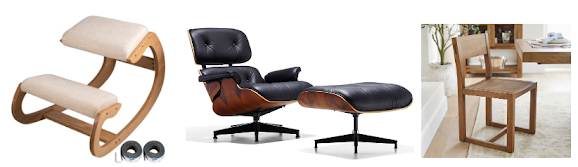
You're shopping for a chair. As you browse the aisles, you note the variety — from backless computer chairs to high bar stools to plush ...
-
 It's a luxury to read great books, films, works of art. You get to jump in, kick around, then stand back and think while the thing s...
 -
 "Make no mistake. It's not revenge he's after. It's a reckoning." In Tombstone , Wyatt Earp and his brother...
 -
 Arkady Plotnitsky who taught me Derrida in Philadelphia in 1989. When I was in college, I took a class on Derrida taught by the impecca...
 -
 A thing is one thing that is many things. It is an assemblage point — a gathering together of diverse elements in a particular way. A rock ...
 -
 The set up is familiar: good girls flirt with bad, get in over their heads, learn a lesson — with some boobs and teen exploitation along ...