This is what True Blood is about: the impossible calculus of human relations. The show does not offer a fixed moral stance; there is no right and wrong. There, are, however, clear limits of decency: pure vampirism is frowned upon.
Read the full article at Thought Catalog >>


3.24.2010
On Michel Houellebecq's The Elementary Particles

I love Houellebecq's The Elementary Particles — it's smart and hilarious and downright nasty. And I love the way Houellebecq deploys a vision throughout all his writing, a vision of the contemporary moment, how we got here and where we're going.
But what's so impressive to me about The Elementary Particles is the way Houellebecq moves so readily between the historical, the cultural, the biological, the chemical, the species, and the absolutely singular way of a character. Houellebecq's vision is vast and complex and sure. To wit:
"Bruno, however, found himself in a less auspicious position. While dominance and brutality are commonplace in the animal kingdom, among higher primates, notably the chimpanzee (Pan troglodytes), weaker animals suffer acts of gratuitous cruelty."
And then:
"From a moral standpoint, 1970 was marked by a substantial increase in the consumption of the erotic, despite the intervention of vigilant censors....Bare breasts spread quickly across the beaches of the Riviera. In a few short months, the number of sex shops in Paris leapt from three to forty-five.// In September, Michel started the quatrieme and took German as his second language. It was in German class that he met Annabelle."
This is not a pyramid, a hierarchy. It's not as though the characters are stand-ins for the forces of nature or history; the characters are not examples per se. Rather, it's that we can't possibly separate the historical, the biologic, and the human: they are what make up this life. Humans are neither the realization of these forces nor agents capable of resistance. They go as they go, amidst the great teem of history and nature which itself is made up of an infinity of singular moments.
Hence, the elementary particles of the title.
3.23.2010
Television on _The Wire_
And the wire winds right into our homes –– the wire is television, that great, misunderstood medium. And once there, it opens up, flowers, extends itself. Most television programs take precise aim, delivering a particular product to a particular demographic. The shows are pat; the jokes and drama and characters canned. But not The Wire. The Wire , once inside the house, expands rather than contracts.....
read more at Thought Catalog >>
2.24.2010
On Chatroulette


Here are some things I wrote to accompany images made by Marc Lafia.
In Chatroullete.com we discovered a new kind of social interaction and identity that is simultaneously a new kind of filmmaking. It is a proliferation of exquisite — and boring and grotesque and...and…and… — moments. This is film making on the go, a collaborative enterprise of narrative shreds that will never add up to anything but this. And is the more glorious and beautiful and hilarious for it.
This is a moment just before the Spectacle and its idiot agents — the news, the government — turn an unmediated encounter into a transaction of fear and money.
Old concepts still define our social network behavior. We want to know where our interlocutors live, how old they are, their gender, education, their likes and dislikes. As McLuhan writes, we cling to the horse and buggy even as the railway pounds by.
The advent of a site and experience such as Chatroullete.com begins to introduce new architectures of the social encounter, encounters no longer tethered by the familiar anchors of place, class, clique, place in the sexual hierarchy, or financial transaction.
This is the network moving so fast that is has sloughed its old skin and its capitalist baggage, leaving us exposed and naked with our desires: What do you want from others?
The moment — because it is a moment and not a narrative — untethers us from the old networks of nation, class, job, psychographic associations. This is the encounter not mediated by capital or the same old metaphors of identity. There is no meta-explanation.
This is at once a collective and an isolated moment, a private experience within the collective network. This is a society of individual moments, a network of fragmented selves that nonetheless are not fragmented.
This is not bottom-up. This is inbetween — inbetween the ads and banners, inbetween the demands of capital, inbetween you and me.
This the dawning of the new flaneur making his way through the digital landscape, traversing the only frontier left him, in search of whatever may come.
What can happen here? A moment of tenderness, curiosity, horror, banality, breast, connection, erection, discovery, fear, loathing, indifference, disgust, knowledge. This is the human and posthuman all at once.
This is the pure put on, the shopping of identities and encounters freed from the tyranny of the Spectacle.
This is x-ray vision, seeing through the walls of houses and apartments, across borders and oceans, breaking down the borders of the bourgeois. This is your living room turned inside out.
This is the moment — no narrative, no explanation, no extension, no mediation. It is dangerous, silly, boring, outrageous, and beautiful.
It is just this.
10.27.2009
How Pixar and Toy Story Got it All Wrong

OK, I have to say this: the basic premise of Toy Story is creepy and so fundamentally wrong. (Yes, I've seen the film with my boy — twice. This is but just one of the many humiliations sustained in my role as dad.)
Sid — the supposed evil kid next door — may be kind of a dick but he's unbelievably creative. When he looks at a toy, he sees opportunity. He sees possibilities. A toy, to Sid, is a starting point to be shed quickly so he can get on with the act of creating. His toys are a database of gestures and tropes, figures and materials, to be manipulated this way and that.
Sid, my friends, is an artist.
And yet he is so cruelly vilified in the film. And what is Sid's crime? He plays with his toys passionately, creatively, interestingly. Andy, the pansy next door, does nothing but recapitulate Hollywood cliche when he plays — the cowboy, the superhero, love stories. Sid is popping off heads, sewing parts together, welding, melding, molding. Sid is a punk rock artiste.
What lesson is Pixar — which is really Disney — teaching our kids? That one should respect the integrity of commodities? That to toy — ahem — with the corporate prescribed rules is evil? That kids who dress in black and make art are the enemy? That the best way to play is to play it safe, within the stipulated norms set by Hollywood and Mattel?
I tell my son over and over: Sid is maligned. Sid is the real hero here. And I think I'm getting through. Yesterday, he asked me for a rocket so we could blow up some of his toys.
Oh yeah.
10.09.2009
On Soft Architecture, via Lisa Robertson
We live in spaces and amongst things that are infused — with memory, mood, texture, tone, timbre, resonance. Buildings, roads, bridges: they are not hard and rigid but structured events, experiences lived all the way through, soft. This is soft architecture.
Design offers more than a spine; it offers — no, it is — an algorithm of possible experiences, combinations, folds, and juxtapositions.
Soft architecture is a phrase from writer, Lisa Robertson, with which I am thoroughly enamored. In fact, I'll say it again: soft architecture. I'm smitten with this phrase. Which is, precisely, the nature of the architecture of soft architecture — ideas are mooded invisible spaces.
Soft architecture turns the world inside out. Or, rather, it facilitates a space that dissolves, renders porous, that line that separates private from public, subject from object. As I enjoy a space, make my way through it, it enjoys me, makes its way through me. Together, we move and are moved. A building, a road, a sidewalk draw me to them and I draw them to me. Together, we make this world. Or: together, we are this world.
We don't unite, world and me; we marble. We are marbled.
Read some Lisa Robertson here
And buy her astounding book here
9.19.2009
The Face: On Richard Avedon


I just saw the Richard Avedon show at SF MoMA. I was cautious, afraid I'd see celebrities. But what I saw were faces — human faces that can't help but bear themselves, that can't help but bear their history and their now.
Avedon's subject is not celebrity at all. In fact, it doesn't matter who's who. What matters is the image — which is to say, the face. This is Avedon's subject, over and over and over: the phenomenology of the face, the way affect lines the flesh and flesh is always and already affected, affective.
The face is the recording screen, the site of consumption and production, where the world enters and where the body plays it back according to its necessarily particular metabolism.
To see face after face, face upon face, faces with faces with faces, is to witness Leibniz's great monadology: each monad is the entire universe but from its perspective. Walking through the museum show, I saw the entire universe, inflected just so, in frame after frame.
The face is mesmerizing. There is something so humbling and inspiring about seeing the human face, again and again, knowing that it is making its portrait of you as you look: each image creates your image, your face.
Subscribe to:
Posts (Atom)
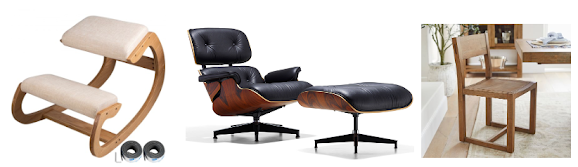
The Posture of Things
You're shopping for a chair. As you browse the aisles, you note the variety — from backless computer chairs to high bar stools to plush ...
-
 It's a luxury to read great books, films, works of art. You get to jump in, kick around, then stand back and think while the thing s...
-
 "Make no mistake. It's not revenge he's after. It's a reckoning." In Tombstone , Wyatt Earp and his brother...
-
 Arkady Plotnitsky who taught me Derrida in Philadelphia in 1989. When I was in college, I took a class on Derrida taught by the impecca...
-
 A thing is one thing that is many things. It is an assemblage point — a gathering together of diverse elements in a particular way. A rock ...
-
 The set up is familiar: good girls flirt with bad, get in over their heads, learn a lesson — with some boobs and teen exploitation along ...