We — or, perhaps, I — spend considerable time trying to read my body, my mood, and how best to adjust this or that. I shift my diet, my sleep, my booze, my recreation — all in an effort to "feel good."
Now, I go about all this — and, I believe, we all go about this — as if our bodies, and our moods, were distinct from the environment. That is, we view ourselves as contained and containable entities — more or less static machines that need adjustment.
But I've recently become more and more interested — and more and more aware — of the inclination of the world, both visible and invisible.
A brilliant friend of mine, Allison Holt, spent time with shamans in Java learning and mapping their metaphysics. And they operate within a world that has planes of energy, in which events persist in an almost spatial sense, as something to be reckoned — just as we, here, reckon our own bodies.
William Burroughs, too, spoke often of possession, of the winds of madness, delirium, malevolence, excitation that operate in this world.
And so I want to suggest a different architecture of thinking the relationship between body and world — a world that is always already mooded, that has its own inclinations and demands and that weighs upon us, quite literally, in multiple ways all the time. These can be as obvious as the cold of Minnesota vs. the dampness of San Francisco. But they can be as mysterious and elusive as an invisible tide of angst or an eddy of excitement.
As we — as I — tend to my body and mood, rather then trying to adjust it, we should be trying to configure it to best navigate, best negotiate, best "go with" the prevailing — and latent — mooded winds. This is to say, our bodies are always already fundamentally — ontologically — enmeshed with the environment.
And so we need not to be reading our bodies per se. We need to be reading the interaction of our bodies with the world. This means that adjustment of diet, of sleep, of recreation is more or less constant as circumstances shift, as environmental conditions shift.
We are mooded bodies moving amongst mooded bodies, visible and invisible. We are mooded bodies that are always going with a mooded earth, mooded trees, mooded streets, mooded people, with mooded spectres of all kinds. The world is a plenum of moods, infinitely dense, perfectly dense with itself, with affective resonances.
Tending to self is not a matter of tending to a body-machine. Tending to self is a matter of tending to a body-world-machine, to a complex of interactions, many of which remain mysterious and magical.
12.23.2010


12.22.2010
We Live in Multiple Times
I've been struck recently by how we live — all of us, everyday — in multiple times at once. The now is always a multiplicity, a series of intersecting nodes that never quite coalesce: the now is a network of varying speeds and various times.
In his Cinema books, Deleuze notes that a filmic image always enjoys multiple times. The example he uses is a man walking a dog through along a river, through the mountains. He asks us to note all the different times occupying the frame at the same time: river time, mountain time, dog time, man time, the time of the frame itself.
I am now seeing this multiplicity of temporalities, of speeds and durations, co-existing in me. I feel the continuation of high school loves — that incredible pathos — winding through me, right now, and projecting itself into the future, into possible worlds. I feel tastes for certain foods — things I loved at one point — burbling now and again and with each craving I am existing then and now. I see the things that make up my life — my son's drawing, art I've acquired recently, art I've acquired ages ago and each item is a time, not just its time but my time, a time of me, of my becoming. Now take all the objects that surround me — the pens and scribbled notes, the bowls with their chips, the forks with their bends, the stored food I once craved: each is a time of my becoming, a duration of my becoming that is absolutely distinct and yet harmonizing, impossibly, awkwardly, with these other times, these other durations.
Yes, we endure — as Bergson notes — and this endurance is a network of durations.
Think now about cyclical knowledge such as the zodiac. What a strange temporality! What a strange kind of knowledge! The cycles are so vast, too vast for one lifetime to truly comprehend. And so the very nature of such grand cyclical knowledge is premised on collective knowing that is temporally rather than spatially distributed. And this calendar, which was forged across time, inflects the present as we consult it, learn from it.
Suddenly, I see the great teem of durations, of temporalities, everywhere I look: the stains and nicks and potholes, the dents and rusts, the gleams and polishes, the wear and tear, the tears and cries and giggles: they are all their own durations existing alongside each other.
And this great swarm of times flourishes within us. Or, rather, this great swarm is our becoming.
Bergson tells us that memory is not reflection. We are our memory — it's how we know how to tie our shoes, throw a ball, drive a car; how we know what we like to eat, what we like to do. Memory is not a warehouse of images. Memory is the name for this great swarm of times that carry each of us along, that is our respective becoming.
In his Cinema books, Deleuze notes that a filmic image always enjoys multiple times. The example he uses is a man walking a dog through along a river, through the mountains. He asks us to note all the different times occupying the frame at the same time: river time, mountain time, dog time, man time, the time of the frame itself.
I am now seeing this multiplicity of temporalities, of speeds and durations, co-existing in me. I feel the continuation of high school loves — that incredible pathos — winding through me, right now, and projecting itself into the future, into possible worlds. I feel tastes for certain foods — things I loved at one point — burbling now and again and with each craving I am existing then and now. I see the things that make up my life — my son's drawing, art I've acquired recently, art I've acquired ages ago and each item is a time, not just its time but my time, a time of me, of my becoming. Now take all the objects that surround me — the pens and scribbled notes, the bowls with their chips, the forks with their bends, the stored food I once craved: each is a time of my becoming, a duration of my becoming that is absolutely distinct and yet harmonizing, impossibly, awkwardly, with these other times, these other durations.
Yes, we endure — as Bergson notes — and this endurance is a network of durations.
Think now about cyclical knowledge such as the zodiac. What a strange temporality! What a strange kind of knowledge! The cycles are so vast, too vast for one lifetime to truly comprehend. And so the very nature of such grand cyclical knowledge is premised on collective knowing that is temporally rather than spatially distributed. And this calendar, which was forged across time, inflects the present as we consult it, learn from it.
Suddenly, I see the great teem of durations, of temporalities, everywhere I look: the stains and nicks and potholes, the dents and rusts, the gleams and polishes, the wear and tear, the tears and cries and giggles: they are all their own durations existing alongside each other.
And this great swarm of times flourishes within us. Or, rather, this great swarm is our becoming.
Bergson tells us that memory is not reflection. We are our memory — it's how we know how to tie our shoes, throw a ball, drive a car; how we know what we like to eat, what we like to do. Memory is not a warehouse of images. Memory is the name for this great swarm of times that carry each of us along, that is our respective becoming.
12.12.2010
The Power of Place

I, for one, constantly underestimate the power of place. Despite my rigorous proclamations about the materiality of life, I instinctively imagine myself as somehow floating above it: when I change environments, I imagine I'm not changing.
But we are fundamentally enmeshed with our place, with where we find ourselves. And these places are deeply enmeshed with us. Space is not a neutral background on which we lay our chairs, rugs, bodies, lives. Space — place — is not the stage upon which our lives play. Space is part of the play, and an integral part at that.
As a perhaps odd aside on that, this is one reason I really love the Pirates of the Caribbean films: with each new film, a piece of the presumed background becomes an active player in the action — the boat is alive, the water is alive. Which is to say, the action doesn't take place on the ship or on the water; it takes place with the ship, with the water.
I was recently in the town I grew up in. I realized that while there I avoid certain places, those places where so much of my youth happened. This time, I went to what I consider the epicenter of said activity. Just approaching it, my body began to hum, my heart beat. I sat in the spot I'd sat a thousand times — a spot where kisses and drinks and drugs and loves long gone all took place.
And all of a sudden, I found myself davening — rocking back and forth as if in Jewish prayer — and soon tears were rolling down my face. And you might say that it's the memories that were the cause. But what is a memory? Where is a memory? I'll tell you: my memories are not solely in my head. They are in this place, part of this place.
And now I find myself moving, leaving a neighborhood I've lived in for over 19 years. I walk those streets I once roamed so freely and they quite literally transform my 41 year old, bald self into a 25 year old jewfroed wonder boy. And now that I'm leaving, I am overwhelmed, as if breaking out of a cocoon — only, instead of a butterfly, I'll just be a bald 41 year old hebe living alone in the middle of nowhere.
But what's surprising is that I am constantly surprised by the penetrating depth, the profound resonance, of the emotion I feel. I mean, of course I should be emotional about it. After all, we live with space, with place — and it lives with us. And yet.
To move is not just to transform one's environment; it is, necessarily, to transform oneself. But we have no ritual to mark this transformation; we talk about it in terms of getting good rent, a cool view. the hassles of moving a couch.
But we tend not to talk about the mourning, and all that that entails.
11.27.2010
Parenting, Pleasure, and Adulthood: Revealing a Life (Well) Lived

What is the task of the parent? Surely, it's to keep the critters alive — fed, clothed, sheltered, educated (although that can mean many things and take many forms), loved (this, too, can take many forms). But is that all? And what do these things even mean?
Parenting today — at least the parenting of predominantly white upper middle class San Franciscans — seems to involve sheltering children from the nuance, subtlety, pain and pleasures of adulthood. We are asked to shield our children — we don't curse, we don't cry, we don't kiss, we don't yell, we don't ignore by reading a book, we don't go out too often, we don't, we don't, we don't....
Parenting has become a thoroughly masochistic endeavor, a martyrdom. I have close friends, dying before my eyes as their jobs suck their life blood, who feel obliged to continue in their misery so they can keep their kids in their middle class homes, in their middle class schools, wearing brand new Baby Gap, and eating organic bananas.
Our kids assume — they assume! — that we will play with them, more or less non-stop. We'll sword fight and wrestle, play with Legos and stuffies, go to the park, the pool, the zoo, play chase and tickle. All the time!
I feel guilty for wanting to take the time to write, to read, to think, to fuck, to drink, to love, to frolic, to sleep, to relax.
And what kind of kids are we breeding? Self-entitled shitheads.
I want to suggest that good parenting is not shielding a child from adulthood — from its pains and pleasures — but is showing a child a life in motion, a life lived with zeal, with passion, a life ripe with nuance and negotiation, with lively thought and secrets that will only be revealed when they are older.
Am I suggesting we weep all the time in front of our children? That we fuck in front of them? Of course not. But not because they're our children per se but because that's just downright rude.
I want my kid to see me interact with other adults, see us discuss Godard and Burroughs and laugh maniacally at things my kid could not possibly understand. I want him to hear me curse and know that that's what grown ups do: they speak emphatically! I want my kid to see a life well lived — and, barring that, at least a life lived.
This may sound easy but I am up against powerful forces that would have it otherwise. Forces that tell me, in no uncertain terms, that I should hide my adulthood: the boy should see me work and play with him and little else. He feels entitled to that. All other adults in his life treat him like that. So when I tell him I am going to write for a bit, he feels neglected and I feel like a dick. For wanting to write!
And so I tell you this: When I tell my kid, sternly, to go play on his own so I can write, so I can read, so I can think; when I go out at night to drink and flirt and fuck; when I pour myself a cocktail as I cook and tell him to be quiet while my friend and I discuss Nietzsche: this is not my lack of love. On the contrary, it is nothing less than my supreme, profound love — a love that often makes me weep, right in front of him so he can see that life remains a place of passion.
11.17.2010
Subscribe to:
Comments (Atom)
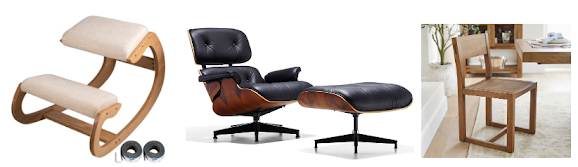
The Posture of Things
You're shopping for a chair. As you browse the aisles, you note the variety — from backless computer chairs to high bar stools to plush ...
-
 It's a luxury to read great books, films, works of art. You get to jump in, kick around, then stand back and think while the thing s...
 -
 "Make no mistake. It's not revenge he's after. It's a reckoning." In Tombstone , Wyatt Earp and his brother...
 -
 Arkady Plotnitsky who taught me Derrida in Philadelphia in 1989. When I was in college, I took a class on Derrida taught by the impecca...
 -
 A thing is one thing that is many things. It is an assemblage point — a gathering together of diverse elements in a particular way. A rock ...
 -
 The set up is familiar: good girls flirt with bad, get in over their heads, learn a lesson — with some boobs and teen exploitation along ...