At first, it seems she's alone. Indeed, we rarely see anyone else — at least in the flesh. She lives alone in a small Manhattan studio. There is basically no dialogue as she doesn't seem to interact with anyone at all.
And yet she is always interacting. We may not see her interlocutors, they may not be present as flesh, but that doesn't make them any less real.
This is a network life. In her solitude, she remains connected — however ethereally, however precariously — to the world around her. Only the world around her is more often than not a telepresence.
What we witness is a different way of going in the world, a different kind of identity, a different kind of social contract. As the title of the film suggests, traditional identification has gone away. She is without name and interacts with anonymous guests known only by their number or avatar.
There is no doubt a great loneliness here. But to reduce her to lonely is to miss so much of what's happening. Because as users of Chatroulette discover, once the meta-narrative of identity disappears — once we stop naming ourselves, stop declaring our social status, our taste, our social tethers such as work and education — we discover something else. Face to face — or screen to screen — with a stranger, free of all meta-discourse that would prefigure the interaction, we discover incredible intimacy. All there is this encounter, these desires, this moment. Within the presumed mediation of the screen, we discover the immediacy of the encounter.
This is not to say that the network life is a life of singular immediacy. It is, after all, a network; it is multiple. And so we see her try to navigate this multiplicity, this teem of possibility, these different ways of going.
And, in particular, the ways of women-going or woman-becoming. As she makes her way through these chatrooms — some are more explicitly sexual — we see her encounter the breadth of possibilities of how to go as a woman, as a sexual woman, in the network. Just as the internet brings us the near-infinite breadth of consumer goods, it brings us the near-infinite breadth of identities. Look at all these modes of becoming woman! Look at all these modes of the erotic!
When we see her dress and leave the house, it is in a man's tuxedo. With her short hair and almost boyish body — although feminine through and through — we are witness to a certain twilight of fixed gender, a place of becoming where labels will not stick hard or fast.
The gaze that would fix her as woman-object has been multiplied. If John Berger finds woman nude in the fixed point of the Renaissance gaze, Lafia finds her naked, criss-crossed with thousands of gazes. Indeed, the film performs this: we see her seeing herself be seen, the film's camera often behind her computer which itself both camera and screen. The gaze has been proliferated and, with it, identity.
One thing that makes this film so powerful, so intimate, is that we get the sense that there is no crew, no cameraman leering, no boom ogling. She is filming herself. And in this seemingly simple act, she has already multiplied herself, made herself something that is seen. But not as an object. This is not a voyeuristic film. We are not invading her privacy. She is not nude; she is naked.
Because this is a network life, a place where identity is always and already expressive, always and already enmeshed in the world, in the web of becoming-selves, in the endless criss-cross of gazes and exchanges.
The camera, then, does not excavate. It does not mediate. It proliferates and connects.


8.23.2011
Drugs as Pedagogy, or Fostering a Relationship with the Cosmos

Thanks to a couple of great teachers, I learned some things in high school. All evidence to the contrary notwithstanding, I learned to write expository arguments. I learned the pleasure of reversal — flipping assumptions upside down. I read The Communist Manifesto.
And — thanks to combinations of marijuana, LSD, cocaine, beer, and bourbon — I learned to seethe with the cosmos.
We have this strange, ascetic tendency to think drugs are somehow external, that being high is not being real, that it's cheating. We ingest food and vitamins and supplements and kamboucha and Zoloft and penicillin without as much as batting an eye. But somehow things like acid and ecstasy are categorically different. I, for one, don't see the difference. We consume in order to thrive. And drugs, when well taken, do just that. If not more.
If nothing else, drugs taught me a certain sense of humility, that I am not in total control, that my ideas and vision and even my body can do what they want. At the same time, drugs have taught me that I can seethe with the universe, swell with its cosmic tides, surf and drown and frolic in its (meta)terrestrial waves. In the words of Rich Doyle, drugs taught me to be ecodelic.
And it's a good thing to learn young, before habit has begun to cement and weigh the body and self down. It's good to be 16, tripping on acid and seeing the invisible textures of the universe. It's good to be 19 and so lit that you can smell the stars. This prepares us for a beautiful life, plants the seed young that life is not defined by commodity and job and an A. It's defined by one's relationship with the universe.
Of course, there are all sorts of problems with teens — or anyone — taking drugs. They o.d.. They go schizo. They augment their depression.
But I don't think we can blame drugs alone for these things. Just as we teach kids to drive (far and way the #1 cause of teen death), we need to teach kids to take drugs well. Charlie Sheen is right — read the directions before showing up at the party.
We focus on teaching kids a relationship to the social — how to be polite, how to perform their gender, how to sit still in their seat and know their phone number and address. But we rarely teach them a relationship with the cosmos, with awe, with the infinite. On the contrary, we try to obstruct their view, prevent their connection.
It would be amazing to have a concerted pedagogy concerned with fostering a relationship to the infinite, a relationship with awe and astonishment. Drugs, of course, are not the only way to create such a relationship. And, when consumed poorly, drugs can impede a relationship to the infinite as much as any soul killing job.
But when consumed well, when incorporated well into a life, drugs can help people of all ages break the constraints of habit, of anxiety, of dread. I love the idea of drug manuals for parents, courses at high school and college, PhDs in ecodelia.
8.14.2011
On Punctuation
I tend to speak emphatically — I gesticulate, enunciate, emphasize; I whisper, accelerate, pause; I lean in, lean out, shout. These are as easy to come by as living.
But writing can tend towards the deadpan. Which is one reason I like punctuation so much — it's the emphatic and the gestural within language. Of course, punctuation is not the only means of emphasis and gesture. Word choice, rhythm, syntax: these are quite literally what make prose pop and move. Still, the keen use of punctuation can make the deadpan sing.
Here are just some of the wonders of punctuation:
The space: Well, this may be the most used but most overlooked piece of punctuation. The space helps define a word — otherwisethingscangetquitejumbled. Of course, not using the space can be powerful, forging an allatonce effect. Within the space, hide secret rhythms.
The comma: A momentary break in continuity, like a crack in the skateboarder's sidewalk. A tempering of breath and sense.
The period: Can go staccato or be the respite at the end of a breathy idea. Use of the full stop is trickier than it seems.
The indentation: Someplace to rest, as if dangling one's feet over a cliff before forging ahead.
The colon: The pull up headlights: the punchline.
The semi-colon: A period and a comma: how fantastic is that? Stopping and not stopping at the same time.
The em dash: One of the more gestural marks, as if putting up one's hands and asking the reader to follow a tangent — but only for a moment.
Parentheses: The more discrete and discreet aside, a visible whisper, a qualification, a tangent, a drift. As language wants so much to be linear, the ability to stop and articulate is more than a luxury: it's a necessity.
The ellipsis: The mark of a lack, of the invisible, the declaration that there is a secret without declaring the secret...the ability to skip over what we know: at once a shared assumption and a claim to privacy.
The exclamation point: Turns any phrase into an emphatic: Just watch! I find the exclamation point quite useful in virtual communication — texts and brief emails: they tell my reader that the seeming solemnity of my pixellated "thanks" is, in fact, a hearty, "thanks!"
The quotation mark: A crane that lets you lift language from elsewhere and drop it in your writing — an essential tool for the bricoleur.
The question mark: Uproots sense, leaves it open and wondering. Oh, I wish English had the upside down question mark!
Italics: Not sure this counts as punctuation per se but sometimes the words themselves need to careen.
The asterisk: Like a loose hair or dangling fingernail; or a tap on the shoulder; or, rune-like, a symbol that more resides elsewhere.
But writing can tend towards the deadpan. Which is one reason I like punctuation so much — it's the emphatic and the gestural within language. Of course, punctuation is not the only means of emphasis and gesture. Word choice, rhythm, syntax: these are quite literally what make prose pop and move. Still, the keen use of punctuation can make the deadpan sing.
Here are just some of the wonders of punctuation:
The space: Well, this may be the most used but most overlooked piece of punctuation. The space helps define a word — otherwisethingscangetquitejumbled. Of course, not using the space can be powerful, forging an allatonce effect. Within the space, hide secret rhythms.
The comma: A momentary break in continuity, like a crack in the skateboarder's sidewalk. A tempering of breath and sense.
The period: Can go staccato or be the respite at the end of a breathy idea. Use of the full stop is trickier than it seems.
The indentation: Someplace to rest, as if dangling one's feet over a cliff before forging ahead.
The colon: The pull up headlights: the punchline.
The semi-colon: A period and a comma: how fantastic is that? Stopping and not stopping at the same time.
The em dash: One of the more gestural marks, as if putting up one's hands and asking the reader to follow a tangent — but only for a moment.
Parentheses: The more discrete and discreet aside, a visible whisper, a qualification, a tangent, a drift. As language wants so much to be linear, the ability to stop and articulate is more than a luxury: it's a necessity.
The ellipsis: The mark of a lack, of the invisible, the declaration that there is a secret without declaring the secret...the ability to skip over what we know: at once a shared assumption and a claim to privacy.
The exclamation point: Turns any phrase into an emphatic: Just watch! I find the exclamation point quite useful in virtual communication — texts and brief emails: they tell my reader that the seeming solemnity of my pixellated "thanks" is, in fact, a hearty, "thanks!"
The quotation mark: A crane that lets you lift language from elsewhere and drop it in your writing — an essential tool for the bricoleur.
The question mark: Uproots sense, leaves it open and wondering. Oh, I wish English had the upside down question mark!
Italics: Not sure this counts as punctuation per se but sometimes the words themselves need to careen.
The asterisk: Like a loose hair or dangling fingernail; or a tap on the shoulder; or, rune-like, a symbol that more resides elsewhere.
8.12.2011
Feeding the Buzz, or The Circuits of Life
 So I'm sitting at the bar the other evening — quel surprise — enjoying my tequila (neat, bien sur) with a small beer back. I'd sip one or the other, ponder this or that, look about (I was sitting at The Cliff House, mesmerized by the infinite shades of grey and the dinosaur pelicans swooping by the floor to ceiling windows), then sip some more.
And, as is the way of a buzz, I began to feel good. And after not sipping but gazing, I'd want to feel good some more so I'd turn to the bar where I was faced with my dwindling tequila and beer.
How to feed this buzz? Well, sometimes I'd reach for the tequila, sometimes for the beer. The decision was made according to some obscure algorithm that includes history (my experiences with said beverages), thirst, knowledge of the relative intensity of each elixir, and my desired buzz state.
It's all quite precarious: too much of this, too little of that, and the buzz dissipates or turns sloppy.
But what struck me sitting there making these decisions was how engine-like we are. We take in; we propel and are propelled; we take in again. It's an open circuit. Or, rather, we are so many more or less open circuits — we take in air, glances, french fries, Uni, caresses, pot, smells, emotions.
The intensity of a the drug buzz — alcohol, pot, coffee, cocaine, LSD — is a highly condensed version of what's happening all the time: we are always feeding our buzz. At least, I hope we are. Too often, I suppose, we feed our sickness, we feed our malaise, we feed our weakness. These are nihilistic circuits that lead us towards zero.
But if we think about life — everything we see, do, smell, touch, think, feel — as feeding our buzz, perhaps we'll be more discerning. Just as each sip of tequila or beer, each drag on the joint, each hit of the blotter feeds our buzz, so does each glance, each kiss, each dumpling, each stretch.
I suppose this is all obvious: we are connected to the world, fundamentally. We are constituents within circuits of becoming, circuits of life. Once we assume that, I like this question: How best do I feed my buzz?
8.05.2011
What I Want from Art
We no doubt want, and find, different things from art — from images and films and books and such. Sometimes, it's nice to encounter something that feels like coming home, that makes you feel less alone. When I first read Philip Roth's Portnoy's Complaint, I laughed so hard it literally hurt — it was so close to home it hit my exact vibration and nearly melted me. I feel the same way about Curb Your Enthusiasm. Both Portnoy-era Philip Roth and Larry David — not coincidentally, both hebes like me — speak my language. They don't teach me anything new; they don't lead me astray of myself. They make me feel at home and I love it.
But that's not the only experience of art that I like, that I crave, that I need. Sometimes — albeit rarely, I want an affective intensity, an emotional reckoning, an intensity of human emotional experience that makes me shudder in every fiber. Joni Mitchell's Blue, Bob Dylan's Blood on the Tracks: these have rocked me (when I was much, much younger; I find that kind of emotional intensity through art harder and harder to come by — because of me, not because of the art).
And then there is the experience I crave the most, the one that really turns me on. This is when the art creates a kind of vertigo as it cannibalizes its own frame, throwing structure and form into the mix. I'm thinking of William Burroughs, David Lynch, Godard. These are the ones who most push my buttons as they don't use the form to express themselves (as Roth uses the novel and Larry David, the sitcom). No, Burroughs, Lynch, Godard each refuse to take the form of their medium for granted. As they create, they assume nothing; they question everything; they make art a question, a questioning, about what's possible.
And this vertigo, this infinite play, moves me in profound ways. Perhaps I don't cry when I watch Godard's Weekend — although I could cry it's so fucking smart and funny and cool — but I am moved. How? I am moved by the interrogation itself; I am not allowed to be complacent as I watch the film; it never wants to confirm me. On the contrary, it asks what it is to be a viewer, what it is watch, to record and be recorded — just as Burroughs asks, with each sentence, what it is to write, to read, to speak, to be in and of language.
Burroughs, Lynch, Godard: they don't let me rest easy. They don't reassure me. And yet, in a funny way, they do — they let me rest easy knowing that they get it: they get that life is in flux, that we can't take environments (in McLuhan's sense) for granted, that life is best lived when it's not anchored, when it's set free to roam.
Cassavetes is interesting: he is a formalist who reinvents cinema by privileging affect over character. That is, he seems to give us representations of human beings. But that's not the case at all. His films don't shoot action in real space and then represent them: they use affect in the way Pollock uses paint. Frankly, this makes the casual or frequent watching of Cassavetes difficult. Rare is the evening I think to myself, "Well, perhaps I'll just kick back and watch me some Faces."
I like kicking back sometimes and watching some silly Hollywood narrative film. It's easy. And, sometimes, the films are very good — have funny moments, smart moments, a great line of dialogue (I am a fan of Tombstone, a film with a great screenplay).
But when it comes to art, I want more than a nice, easy experience. I want to be made to sit up and pay attention, to heed the moment, to reckon sense, to risk nonsense. I don't want to be distracted; I want to be turned on to life.
But that's not the only experience of art that I like, that I crave, that I need. Sometimes — albeit rarely, I want an affective intensity, an emotional reckoning, an intensity of human emotional experience that makes me shudder in every fiber. Joni Mitchell's Blue, Bob Dylan's Blood on the Tracks: these have rocked me (when I was much, much younger; I find that kind of emotional intensity through art harder and harder to come by — because of me, not because of the art).
And then there is the experience I crave the most, the one that really turns me on. This is when the art creates a kind of vertigo as it cannibalizes its own frame, throwing structure and form into the mix. I'm thinking of William Burroughs, David Lynch, Godard. These are the ones who most push my buttons as they don't use the form to express themselves (as Roth uses the novel and Larry David, the sitcom). No, Burroughs, Lynch, Godard each refuse to take the form of their medium for granted. As they create, they assume nothing; they question everything; they make art a question, a questioning, about what's possible.
And this vertigo, this infinite play, moves me in profound ways. Perhaps I don't cry when I watch Godard's Weekend — although I could cry it's so fucking smart and funny and cool — but I am moved. How? I am moved by the interrogation itself; I am not allowed to be complacent as I watch the film; it never wants to confirm me. On the contrary, it asks what it is to be a viewer, what it is watch, to record and be recorded — just as Burroughs asks, with each sentence, what it is to write, to read, to speak, to be in and of language.
This is one of the greatest scenes from a film ever.
Burroughs, Lynch, Godard: they don't let me rest easy. They don't reassure me. And yet, in a funny way, they do — they let me rest easy knowing that they get it: they get that life is in flux, that we can't take environments (in McLuhan's sense) for granted, that life is best lived when it's not anchored, when it's set free to roam.
Cassavetes is interesting: he is a formalist who reinvents cinema by privileging affect over character. That is, he seems to give us representations of human beings. But that's not the case at all. His films don't shoot action in real space and then represent them: they use affect in the way Pollock uses paint. Frankly, this makes the casual or frequent watching of Cassavetes difficult. Rare is the evening I think to myself, "Well, perhaps I'll just kick back and watch me some Faces."
I like kicking back sometimes and watching some silly Hollywood narrative film. It's easy. And, sometimes, the films are very good — have funny moments, smart moments, a great line of dialogue (I am a fan of Tombstone, a film with a great screenplay).
But when it comes to art, I want more than a nice, easy experience. I want to be made to sit up and pay attention, to heed the moment, to reckon sense, to risk nonsense. I don't want to be distracted; I want to be turned on to life.
7.31.2011
Omens


You wake with a sense of foreboding — not just anxious but you sense the imminent is not good. As you make your way through your morning, things just keep going wrong — you stub your toe, run out of toilet paper, of toothpaste, you spill your coffee, bump your head (hopefully not all of these things).
Perhaps it's not something that's happening to you — you get a strange email from a friend, hear sirens roaring by, read a disturbing headline.
Of course, an omen need not be foreboding. Maybe you wake and everything falls into place. You feel optimistic, full of promise, of potential. The world yawns and brims.
What do these things mean? Perhaps nothing. Perhaps it's silly superstition. After all, how can something now foretell the future?
Well, time is not a point; it is a trajectory. The now is moving, always becoming, the past moving into a perpetual now that is always becoming the future. And this becoming, this trajectory, is in fact many trajectories, a whole series of virtual worlds intersecting (and not) — all the things you've been and done swirling through time (as time: time is not exterior to life — time is a dimension of life). This is to say, an omen is not one step within a successive series of events; it is an intersection of trajectories happening now — that same now that is itself a becoming past-becoming future-becoming now.
Things don't lead up to this moment. At least usually they don't. Time is not linear; events may be caused by something but not necessarily and even then the cause may only be local, relative. Time moves every which way — forward, backward, sideways. In fact, I'm not even sure what backward and forward even mean in this context. They can only be relative, local terms. Time is a network of moving trajectories, tubes of physio-affective flow a la Donnie Darko.
In some sense, the now is a moving node within an infinitely dense network of virtual and possible worlds. The now is a fold of time, an origami crane always being made into something else.
Time is permutation, everything always changing. Omens abound, not as signs of change but as change itself. This is not superstition; this is physics.
So of course there are omens. Of course things that happen now relate to the future. How could it be any other way?
One of Marc Lafia's multiscreen films from the series, Permutations. Time is permutation.
7.29.2011
Networks, Capitalism, Corporations, & The Promise of Local Pants
This may seem obvious to you. But I'm a bit slow witted so bear with me.
The anti-monarchy revolutions — the French Revolution, the American Revolution, etc — were bourgeois revolutions. The emerging business owners wanted a piece of the pie, a pie owned by royalty through inheritance. It seemed like a big jip that they were left out. So off with their heads!
In order to mobilize this revolution, they cast it in terms of the everyman — freedom for all, equality for all. But capitalism is not built on equality for all; it's built on exploitation: you work for me. Wealth flows upwards.
Of course, the promise of capitalism is that anyone can become the exploiter, the point of capital condensation. This sounds pretty good, even if silly. After all, the system could not work if everyone was an owner. Nevertheless.
And so culture moved from a hierarchy — a pyramid — to a network, a distributed system that flows multiple directions. This network, which is today quite prevalent, seems to hold the promise of those revolutions of yesteryear: everyone participating, all nodes equal.
But this network is not an emergent force of culture; it is not a contemporary phenomena. The network is capitalism.
Which means the network is not composed of equal nodes. Some nodes are points of concentration. This is as it should be, no doubt: the more compelling content develops a bigger audience and hence becomes a more prevalent node. No problem.
The problem is when this game, this network, gets gamed — when the rules are rigged beforehand so that certain nodes are more privileged. Enter: the corporation.
The corporation is itself a networked entity, a composite of a sort: it gathers many individuals under one name, one agency. It is only possible post-monarchy, post-pyramid.
But it becomes more than just another node in the network; it becomes hedger, game-rigger, of the flows within the network. Rather than capital and resources being able to flow every which way, the corporation ensures capital flows towards it. It is vehicle for the ready concentration of wealth and power. (How? Well, the corporation can buy up smaller businesses. This may seem like a right but it is quite strange: How can something that does not exist per se — namely, a corporation — buy anything? The rights for a corporation to buy anything came from the 14th Amendment — prior to those Supreme Court cases, a corporation was not allowed to buy things. So corporations systematically eliminate competition by either squashing it or buying it.)
So while the corporation is a product of network culture, it works against the promise of the network, the promise of equal nodes (or the equal opportunity for all nodes). And yet it continues to spout the same promise: participation for all and by all!
The Big Dupe is that the game was rigged from the get go. The revolution was always a bourgeois revolution. It was not the rise of the everyman; it was the rise of the owner who convinced the everyman that the revolution was good.
All this network freedom — all this blogging and Facebooking and tweeting — is the oligarchy's propaganda.
And yet the network may have a structure and possibility that belies the oligarchic interest. There is a rise of decentered nodes of production — local makers of goods, of food and clothing and soaps and entertainment.
Two modes of the network, then, at work: the anti-capitalist tendency of the corporation to monopolize, to game the system, to concentrate wealth. And the tendency of the arty individual to grow his own food, make and sell beautiful pants, to serve local communities.
Subscribe to:
Posts (Atom)
The Posture of Things
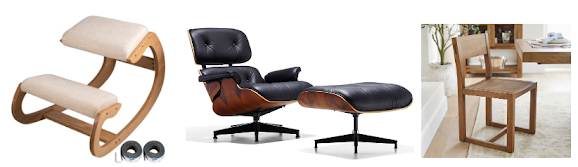
You're shopping for a chair. As you browse the aisles, you note the variety — from backless computer chairs to high bar stools to plush ...
-
 It's a luxury to read great books, films, works of art. You get to jump in, kick around, then stand back and think while the thing s...
 -
 "Make no mistake. It's not revenge he's after. It's a reckoning." In Tombstone , Wyatt Earp and his brother...
 -
 Arkady Plotnitsky who taught me Derrida in Philadelphia in 1989. When I was in college, I took a class on Derrida taught by the impecca...
 -
 A thing is one thing that is many things. It is an assemblage point — a gathering together of diverse elements in a particular way. A rock ...
 -
 The set up is familiar: good girls flirt with bad, get in over their heads, learn a lesson — with some boobs and teen exploitation along ...