5.20.2013

Bergson, the Big Bang, and Slo-Mo


If the artist succeeds in producing the impression of a movement which takes several moments for accomplishment, his work is certainly much less conventional than the scientific image, where time is abruptly suspended. — Rodin

Everything, writes Bergson, is image (see the incredible Matter and Memory). In fact, one can freely interchange the words matter and image — they mean the same thing. Bergson's point, among others, is that the entire philosophical discussion about whether a thing exists in-itself or for-me is not just silly but false. It's a poor question that leads to poor answers. So Bergson begins somewhere else, from everyday life and claims things are just as they appear. Things exist within the perceptual field, as matter to be taken up by perception, at once for-itself and for-me (and for-world). (The perceiving body — you and me — are images too, part of the perceptual field. As Merleau-Ponty would point out, perception is a chiasmus, an intertwining of seer and seen. You can touch and see your own hand. Try it.)

Bergson goes on to say — and this is the intuition that drives his entire philosophical project — that motion, time, change are not something added to the world but are constitutive of it. All of philosophy, he argues, and much of science is premised on the notion that time is exterior to things. Movement, it is imagined, can be tracked by plots on a line — point A to B; B to C; and so on. We reduce movement to space.

But, for Bergson, that is to miss movement all together.  Movement cannot be divided and reduced to a segments of space. Movement doesn't happen in discrete, spatial sections. It is continuous, a dimension of being (or becoming) unto itself. A thing is, among other things, its movement, its speed, its change. My balding and greying, my general withering, is not extrinsic to who I am. On the contrary, it is intrinsic: I am this way of going through the world, of shedding skin, of metabolizing food and ideas and people. I am this living. I am this dying. I am this going.

Sport revels in speed. Throw harder, move faster. But when it comes to knowing the truth — or a truth — of sports, we have this odd tendency to slow everything down. When we look at slow motion, we imagine that we can see what really happened.

From one angle, this seems obvious. The play happened so fast, we can't tell if the runner was safe or not, if the ball was in or not, whether it was a fumble or not. So we slow it down to let our eyes catch up.

But, from another angle, it's really, really strange. First of all, to see what really happened, we go to the video tape. That sentence is incredible; it's as if it's written by Baudrillard. What happens in real life is not what happens in real life; it's what happens on a video tape. That seems like a reversal of Platonism, a privileging of the copy over the original.


And yet the video tape today is the promise of truth. And not just any video tape but the video tape slowed down to a near stop. The dream — the myth — is that if we eliminate motion from life, we will get the reality, as if time and change were a distraction along the surface of life, something to be brushed away to get at the foundation: fixed, still, absolute, unmoving truth. We may have moved the Forms from life to video but only so we can see the Forms more clearly, a double reversal of Platonism so that we end up back where we started (more or less).

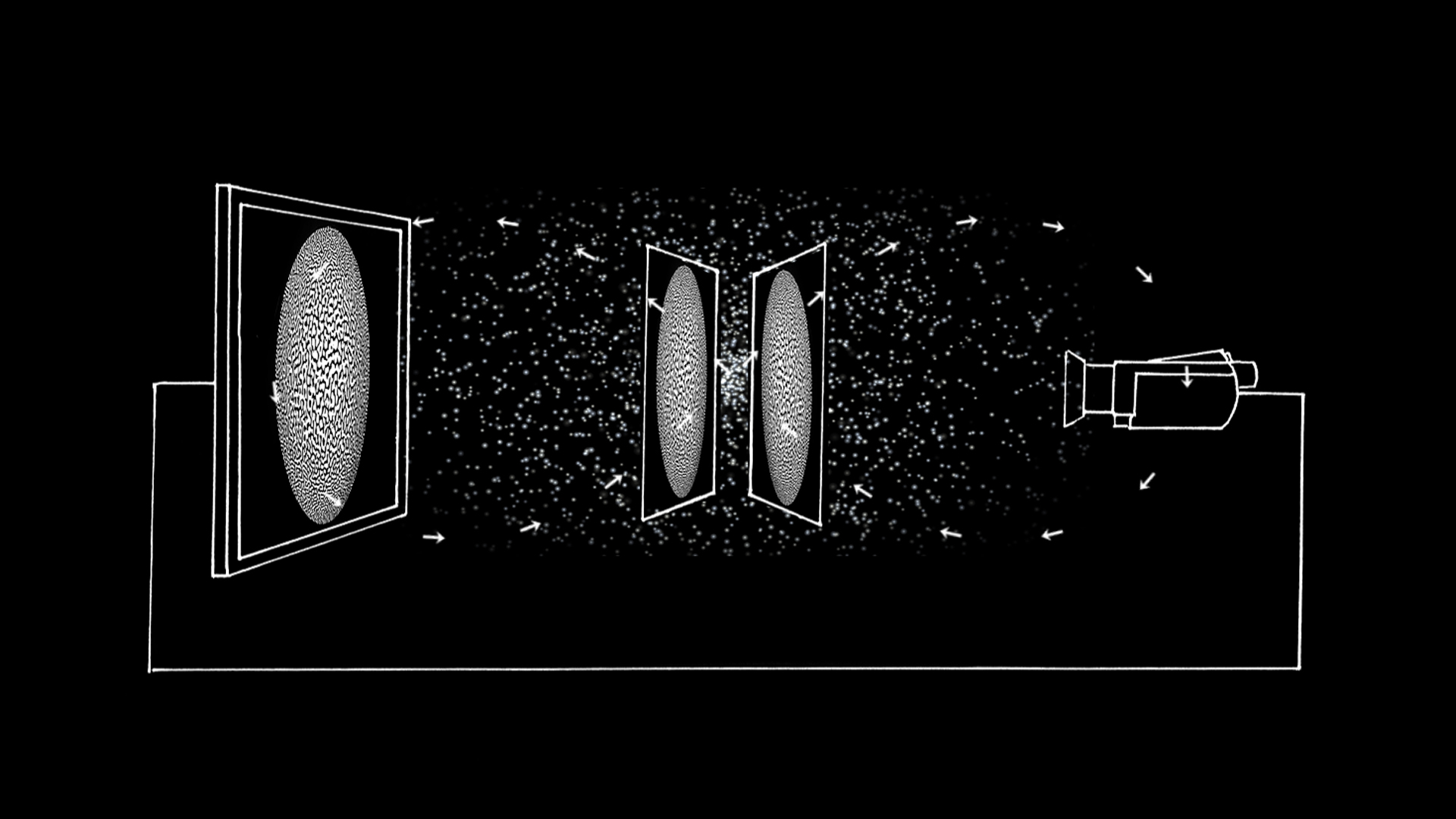
What's so strange is that slow motion looks insane. When we distort time so much, things transform so radically it's funny that we still consider it what really happened. Look at a slow motion video of someone's face being distorted by the wind. It doesn't look human. It looks like something else, some other creature, some other species.

Which it is! As Bergson argues, time — which is to say, movement and change — is not something added to the world. It is the world. The world is an event, a process, a becoming and not a being. Everything in the world is a process, something that happens. A rock happens as much as river happens only at a different speed.  Change the time of something and you don't reveal the truth. You literally create something new.

This is not to say that I am for or against using slow motion in sports. Part of me loves it. I see it as this incongruous introduction of video art into the culture and experience of macho athletics. There is something beautiful and hilarious about seeing Michale Jordan's tongue wagging so languorously as he leaps. His suspension, meanwhile, takes on this otherworldly demeanor.

There are of course practical elements, as well. Having slow motion to determine if a player is out or not in baseball would destroy the game for so many reasons I will not consider here. My point is that the promise of slow motion is built on an unstated assumption that life is geometric, 3D, shapes just sitting there.

This is implied in the myth of the Big Bang, as well. The universe was one big ball sitting there doing nothing. That is the imagination of pure being. No knowing, no thinking, no breathing, no shitting, no shedding. And then boom! It exploded. Which explains all this movement — these planets and asteroids and suns and rivers all spinning, careening, colliding, emerging, flowing.

But, for Bergson, matter is moving from the get go and doesn't stop. The Big Bang was not something that happened one time; it's something that has always already happened.  The universe is the Big Bang. Or, rather, the Big Banging — a process, not a thing. 

5.13.2013

Models of Living


Think, for a moment, of all the people living in this country. And then all the people living in the world. Don't think of them as a swarm or as the masses, the public, or a people. Try to conjure them as individuals in their houses with the their tchotchkes and doodads; lying in bed with this and that streaming through their head; how they like to kiss, suck, fuck; the different friends they have; how they interact with their kids, their parents, their siblings. It's dizzying and gloriously so.

And yet, despite this baroque complexity, we have shockingly few models of what constitutes a way of living. There are these assumptions we make as we size each other up and then, in the deep dark night, size up ourselves.

For instance, it is assumed that out of high school you go to college (the passive voice in this instance seems apropos). If you do something different, you have to explain yourself at great lengths and defensively. You have to justify your decision. But to decide to go to college demands no such justification. It's just what you do.

This is the insidious nature of what Michel Foucault calls discourse. Something is decided to be true, to be proper. And everything else is categorized in some fashion or other as a deviation. The true is that which doesn't need explanation. Everything else does.

Now consider the discourse of growing up. After college, you get a job. And not only do you get a job, you choose a career. You're allowed to party for a while but at some point you settle down. You get married, buy a house, spawn. And then you cling to the end of your life with focused intensity, prolonging death through medications and breathing tubes until you become too expensive for your insurance or family and they let you finally die. 

Within this trajectory, there are accepted forks. Divorce, for instance. Divorce is a bad thing. The children of divorced parents are of course — of course — at a disadvantage. And, the story goes, we are a sad people because the divorce rate is so high. 

Do anything differently; act any way differently; believe differently and you have to explain yourself ad nauseum — and your words will still probably fall on deaf ears. Divorce is bad and how dare you feel differently? In fact, your elaborate justification is probably a defense mechanism so you don't have to deal with the sadness.

But echoing Louis CK, I gotta tell you: divorce was good for me. It's good for my kid. (I won't speak for my ex but I assume it's good for her, too.) It's good for the world. In fact, I don't feel like I got divorced. I realigned my family.

You see, it turns out that having to work all the time, live in some crammed up apartment, and raise a human kid is, for the most part, awful. We tried for years despite the glaring untenability of the situation. Why? Because that's what you do. Divorce is a failure. We felt like we were failing our kid. When I moved out, I cried for months with an overwhelming sense of guilt.   

Which is insane! We were simply tending to our lives. Why must it be cast as a failure?  Today, we have a beautiful thing you never see modeled anywhere: a distributed household, that is, one household, two houses. Stay in a marriage, stay living together, when everyone is miserable day in and day out — then you're not considered a failure. You don't have to explain yourself. You don't feel guilty. Google "divorce" and, right after the lawyers, you'll see coping sites for the children of divorce. People ask me: How's your son dealing with the divorce? But if I were to ask: How is your son dealing with you and your idiotic husband? I'd be an asshole.

These discourses, these models of life, are insidious, egregious, and soul crushing. When I was teaching undergrads, I never ceased to be amazed at the sense of entitlement. As the professor, I assumed these paying students who can choose any course they want, more or less, had decided to take my class. (When I taught a requirement, I went easy on the amount of work I assigned.) But, for the most part, freshman assume this is 13th grade so it's my job to hold their hand, as if I were in loco parentis. I am not accusing youth today; I was the same way. It's part of white middle class discourse: you go to college right out of high school. No questions asked because no questions need to be asked. It's just the way things are. 

And this sense of what's right continues throughout your life. Every time you consider deviating, you are put in a position to justify — to your friends, family, co-workers, yourself.

I've never really had a job job, that is, a place you have to go to every day except the weekend. I'm 43 and only worked a job job for, I don't know, three years all together (including when I worked retail as a kid). I contract often with marketing agencies. And, at some point, they try to figure out why I don't work for them full time and things tend to get a bit soured as if I must be judging them rather than affirming me.  

The same was true when I was teaching. Everyone assumed I was teaching adjunct while I looked for a so-called real tenure track professorship. But I never applied for an academic job because I don't really like academia and it pays shit, to boot. I like teaching, however. So I worked as a marketing contractor and taught adjunct. Meanwhile, to both the academic and corporate world, I was suspicious. Which doesn't matter to me except that I needed to justify myself to them which, alas, is exhausting. Why don't they need to justify their lives to me?

Now, if I went off the grid and became a farmer, there's a model of that (even if it's rarely portrayed and, for the most part, vilified). Professionally, there are no models for how I work — not quite square, not quite alternative. Of course there are other people leading lives that elude the same old structures. But I never see them modeled; they're not on TV or in movies and only rarely in books. (This is one reason I was drawn to Showtime's "Weeds." It offers a different model of family and parenting as she actually asserts her adulthood and sexuality.)

We are told the same old stories all the time and then repeat them to ourselves, to our lovers, to our families and friends until we actually believe them. We believe that getting divorced hurts our kids. We believe that the only way to be happy is to get married. We believe that owning a house is a good thing. And then, when none of these things work out, we consider ourselves failures.

What's insane is we've never seen any of these things work out. Look around. Does it seem like most people who have gone right to college, had a career, got married and had kids are happy? Isn't it achingly obvious that these models don't work, that most people are miserable, medicated, and angst ridden? Sure, some of you are saying, Hey, my parents are happy! Or: I'm happy. To which I say, That's excellent. But please note that I am not saying these things are inherently bad; I'm just saying they're not inherently good. And that there's plenty of evidence to back me up. 

Neither marriage nor divorce are good in and of themselves. They are good if they are good and bad if they are bad. (There are many more failed marriages than failed divorces.) We can not get married. We can be renters for life. We can not have careers. We can have multiple lovers and still love them all. We can raise kids without two parents, same sex or not, living in the same house.

In reality, people lead particular lives that navigate and negotiate the reigning discourses. What's so painful is that there are so few models and that the models that exist suck. So in turn we have to expend our energy doing this navigating and negotiating. Rather than affirming my familial realignment, I have to answer people's idiotic questions about how my son is dealing with it. Rather than affirming and enjoying my solitude, I have to explain that my not wanting to marry again is not because I feel I failed or because I'm jaded or because I'm not ready (oh, fuck, that is the most condescending comment I get). All this explaining drains my vitality. Which is why I lead a predominantly reclusive life. I don't want to explain and justify myself.

Sex is one place our culture does indeed offer a wide array of models thanks, in most part, to internet porn. Go online and within two clicks you can find hundreds of different models of pleasure giving and receiving. It's staggering, really. And, as a result, it's hard to feel weird today about your sexual turn ons. Yeah, I just like wearing diapers and being peed on. Cool? If only we had such a breadth and variety of models for work, dating, marriage, parenting, for living. 

5.08.2013

Rigor Shmigor


When I was a grad student, I relished the rigorous read. I'd devour a text — that's what academics call books and articles — word for word, gesture for gesture, trope for trope. It afforded me a profound satisfaction, a satiation, a resonant reverberation. The experience was less excavation than erotics (not that those two need be opposed). There was something sumptuous to me about letting Foucault's — or Gadamer's or Nietzsche's — words linger in my mouth, savoring every syllable, relishing every figure. It was making love in every sense of the word.

But there was an implied moral component, as well. Rigor is an academic mantra, an accolade, an ideal. You gotta be rigorous. You have to know the thinker, the writer, the artist inside and out — and all the secondary writing on that person. That's why a dissertation is supposed to exhaust the literature on your subject.

This was a problem. Rigor, to me, was aesthetic, not moral. I enjoyed devouring a book.  But that didn't mean I had to read everything he wrote. I mean, I did a rigorous reading of Paul Ricoeur's La Métaphore Vive but do I have now to read everything Ricoeur wrote? Holy shit, I hope not. No, I like reading some of this, some of that, a dab of de Certeau, a bit of Bataille, a little of Lacan.

Every now and again, I'd be so enamored of a writer, I'd read everything he wrote (it was usually a he, I will admit).  But once it came time to read the so-called critical writing, well, I just couldn't stomach it. To plod through arid academse, to ponder such pedantic prose: I was not constitutionally capable. My body would revolt at the mere titles of articles. By the end of the first paragraph, I'd be weeping and retching.  The bibliography of my dissertation has, I don't know, 25 books — all written by the people I was writing about. 

I did entertain some vague ethical notions of rigor. Something about being true to the text, respecting it, and so on. I remember believing that Deleuze was rigorous but that Guattari was frivolous; I read The Fold but scorned Anti-Oedipus. 

That was before. This is now. Now I could care less about rigor. I just want something that turns me on — an exquisite phrase, a nasty figure, a keen turn of thought. I want it messy; I want it to slur with depravity, with lust, with love. I want it to challenge coherence; I want it to slip and slide and bleed. Now, it's Guattari and his free wheeling schizoanalysis that turns me on. 

This is not to say I don't appreciate rigor. But my appreciation is aesthetic, not ethical. I love when artists are so insanely rigorous that their work takes on an aura of madness. Or a book, like Badiou's Being and Event, is so absurdly thorough. 

But rigor is not a mandate for me — morally or aesthetically.  I can read a text, take any snippet of it I want and do what I want with it. When I quote people now, I go by memory. Who cares what the so-called real quote is? Ok, sometimes it matters and sometimes it's beautiful.  But, mostly, who gives a shit? The way I remember Nietzsche is Nietzsche, too — or, at least, is the Nietzsche that matters to me. And if some pedantic prig wants to come along and say otherwise, let 'em. You don't like my Nietzsche? Who cares? Call it something else.

Words, art, texts are only as interesting as the new experiences they foster. If I read something and can then spin it into something else, isn't that incredible? Do I really need to be faithful? Do I really need to be rigorous?  Just give me something that lives and lives well.  Give me something that foments new life. Rigor shmigor.


5.01.2013

I Wanna Be a Poseur


I saw my first Dead show in 1985 — at SPAC, the Saratoga Performing Arts Center. Hot summer night; a sprawling, grassy, tree lined field. Dropped off by a friend's father; his family had a summer house nearby where we'd spend the night. We'd driven up from our small, posh town on the Hudson River, about 20 miles north of Manhattan. The show was an incredible experience, this undulating party of dancing, pajama clad bearded men and women. Everything from the music to the clothes at a Dead show was always so soft, so cozy, even if not terribly clean. Everyone so very happy and so very high.

The shows were not just concerts. They were experiences. And this is important. A concert keeps everyone in the same position, eyes on the stage, the audience in the dark. It's a one-to-many relationship. But a Dead show was an experience. Sure, we were listening to the music. But there is an experience at Dead shows that exceeds the music; the band is the world's greatest bar band. People followed the Dead around for months at a time; sometimes, years. It was a moving community that would let you peruse the grounds before moving on.

Me, I'd see the Dead, I don't know, another 20 or 25 times over the next six years. But only when they were playing nearby. I had friends who'd haul up to Foxboro or down to DC. Not me. I saw them at the Garden, the Meadowlands (inside and out), the Vet in Philly.

I knew I was a tourist. While I had a certain affection for the crowd, I never felt like I belonged to the  Dead community. Nor did I want to. I wasn't hardcore. I didn't want to sleep in a tent every night in a parking lot and eat tuna out of a can and smell sweaty dudes' dreadlocks. I didn't want the promise of free love (which is an oxymoron, I know now). I loved my girlfriend and fucking her was plenty, was perfect, was all this skinny hebe needed — and all he'd ever need, frankly.

I don't want to paint a picture of long haired hippy bullies giving me a hard time. Shows were a very loving experience. I remember my last show, at JFK in Philly, summer of 1989. I went without tickets and without drugs and with my mad crush on my arm. Within minutes, we'd scored both and within an hour were experiencing great profundity. Usually, I hang back in crowds; I'd sit in the seats towards the back. This time, I was down on the floor amidst the waves of flesh. It was hot. I was in shorts — and I never, ever, wear shorts. During the half-time – Dead shows had long intermissions, these  brightly lit deranged experiences — I was sitting on a blanket on the ground with this ridiculously emphatic smile on my face. As zaftig tie dyed women passed m going here or there, they'd all spontaneously pat me on the head.

I had no problem with being called — or being — a poseur. I would have nothing wrong with aspiring to live a life I idealized, a more robust life, an extreme life (even if I didn't actually want that life). Sure, posing may be a sin but it's also a sign of desire.

I know other scenes have their issues of authenticity. I think of punk and gangster rap. It's always been a refrain in the popularized rap world: He's not real gangster. He grew up in Connecticut.

The notion of the poseur used to annoy me. Who the fuck are you to tell me I'm real or not?  But now I like it. It raises the stakes of taste. It says: Your taste in music will not save you. Wearing the tie dyed shirt ain't shit. It's how you live your life every day. It's not just how you are at the show; it's how you are, how you go, everywhere.  

I was in the Mission today (the "hip" San Francisco neighborhood) a warm, sunny Sunday afternoon. And the barrio — well, what was once the barrio — was filled with tourists — not from other cities but from other neighborhoods. They'd come to go to the hip cafes and restaurants for brunch (fucking San Franciscans fucking love fucking brunch).  And I realized that, today, all you have to do is buy the cool pants, go to the cool bar, and you're in! There is nothing more at stake. The Mission used to be the home of gangs and people without square jobs, people who wrote shitty graphic novels and choreographed exquisite dances. Now, everyone works for Google (or Apple or Genentech or...or...or...). 

For white middle class people, there is no way to be a poseur, anymore. What could we possibly pretend to be? A product manager at Google? What do skinny jeans signify? That I work for a software company? That I listen to Beach House? There is no posing anymore; there is no life to aspire to.

In the punk scene, in the Dead scene, there was something more than wearing a ripped coat and safety pins or tie dyes and dreadlocks. There was a fuck you to the square world. Punks squatted and avoided work. They lived on food stamps and transient, bullshit jobs. This may all be facade; the line between real and poseur may be a fantasy, an ideal.  But it's an ideal that is no longer possible, not for white middle classers. What is the lifestyle of so called indie music? What does poseur mean to James Blake (who I love, by the way)? What is the more that Coachella demands of people?


There's nothing to pretend to be. Lifestyle, rather than being the style with which you lead your life, has come to mean the style of clothes you wear, the style of restaurants you go to. Hep  — yes, the word is hep — youth culture has become pure trappings: it's duds and nothing but.

Yes, the concept of the poseur is bullshit. After all, what is a real lifestyle? Who gets to decide? Does the fact that you were born with money exclude you from this or that authenticity?

And yet the fact that poseur is a critique that can be levied declares that there is something more at stake than what you wear. And, today, there is no more; there is nothing greater at stake, no alternate life to lead. Today, I'd love to be be a poseur as it would give me something more — something outside the square world — to strive for. 

4.26.2013

Against All Hope


I want to learn more and more to see as beautiful what is necessary in things; then I shall be one of those who make things beautiful. Amor fati: let that be my love henceforth! I do not want to wage war against what is ugly. I do not want to accuse; I do not even want to accuse those who accuse. Looking away shall be my only negation. And all in all and on the whole: some day I wish to be only a Yes-sayer. — Friedrich Nietzsche


Between Hollywood and its counterpart, politics, hope has to be the most insidious trope. Apparently, without it we're lost. We sink into an abyss of depression, drugs, amorality, violence, and other nasty things. 

But it's hope that's nihilistic. Hope refuses to embrace this life, what's happening here in this world. It's not that hope wishes things other than as they are. It's that hope doesn't do anything about it. Hope clings to some ideal state over and against this life. And ideals are violent and propagate more violence by trying to force the flux of life into the rigid container of abstract ideas. People murder and maim for ideals.

Of course, a lot of things in this world stink. Mayhem, idiocy, douchebaggery, and cruelty abound.  So what's wrong with wanting things to change? 

The answer is nothing. It's how we approach change that matters; everything is in the how. Hope pines but does nothing. And pining is not productive. Pining is petty. Pining is whining and whining is weak. 

The trick, as Nietzsche says, is not to turn away from life — even if your life is filled with suffering! Because there is no other life out there; life is what happens here. All this stuff, all these feelings, all the douchebags and sunsets and dog shit, all this sickness and war, all the schizo homeless guys left to rot in the streets and fuckstick academics and idiotic testing of second graders along with the impossible intoxicating scent wafting from her nape: this is all there is. 

There is no out there. There is no transcendence. There is no special place outside of this life. This is Nietzsche's great reversal, his upending of Judeo-Christianity: appealing to transcendence, to god or God and its promise of heaven and its commandments delivered from afar is nihilistic. Those who profess hope and God and self and ego are anti-life (or anti-Life). They do not affirm the messy complexity of it all, this great seething teem of existence. They wish it all to go away, to give way to a magical kingdom or certainty or a bedrock of truth. This is not even a death wish as death is integral to life. No, it's an appeal to no-life, an appeal to nothing: it's nihilism.

Nietzsche is of course often considered the nihilist. Isn't he the one who proclaims the death of God? Well, actually, he's not the one; it's a character within a story he's telling who proclaims god to be dead. But, more importantly, Nietzsche affirms this life, what we do and say and feel and think. He doesn't look elsewhere, to a nowhere. It is belief in God that is, for Nietzsche, nihilistic.  

But still what's wrong with wanting things to be otherwise? If I'm sick or suffering, why can't I wish it to go away? How does that make me a nihilist?

Changing things doesn't make one a nihilist. If you're sick and being beaten by life, of course you should change things. Unless you're a masochist. But you shouldn't hope for things to get better; you should will them to be better. You should do things. 

When you're sick or unhappy, there is no one to blame, not even yourself. Everything that happens happens — not for a reason; that's religious silliness. It just happens and such is life. There is no bad luck. Oh, I just can't meet the right guy. Or: I met the right guy but he's married. I have bad luck. That's bullshit. You are your luck; you are this life you're leading. There is no other life, no other you. My formula for greatness in a human being, writes Nietzcshe, is amor fati: that one wants nothing to be different, not forward, not backward, not in all eternity. Not merely bear what is necessary, still less conceal it—all idealism is mendaciousness in the face of what is necessary—but love it.”

The world doesn't do things to you. You go with this world, necessarily, and so what happens to you, happens with you. You may get sick, get dumped, get fired, get the shit kicked out of you, get your legs blown off. You are everything that happens to you. Embrace it. To hope for things to be otherwise or claim bad luck is to be self-loathing. Don't hope for things to be otherwise. Will them so.